
Why Bothell Home Prices Have Outperformed the Seattle Metro
Why Bothell Home Prices Have Outperformed Seattle Metro
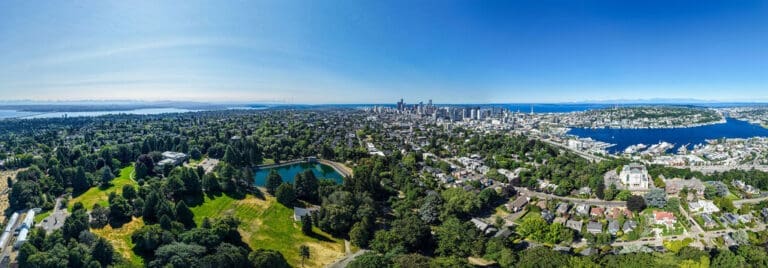
Seattle's office towers are emptying out. Bellevue's are filling up. That sentence has more to do with your home value in Bothell than almost anything happening in the residential market itself.

Here's a headline that crossed my desk this week. Seattle has lost a meaningful share of its commercial office space over the past two years. Much of that contraction did not disappear. It moved across Lake Washington to Bellevue, which has seen leased office space climb at the same time.
And here's the question I'd expect from anyone reading a home real estate blog. Why is Aaron talking about office vacancy rates?
Fair question. Full stop, here's the answer: where commercial goes, people follow. And where people work is where home sales go. That is not a theory. That is the entire engine behind why Bothell home prices have outperformed the Seattle metro through one of the strangest real estate cycles I've worked through in this business.
Why a Home Agent Is Talking About Office Buildings
I've been driving these streets since I was behind the wheel of a Lyft, picking up riders headed everywhere from South Lake Union to the Eastside, long before I held a real estate license. You learn something doing that job for seven years that you don't learn any other way. You learn where people are actually going, every single day, regardless of what the For Sale signs say.
What I watched happen in that window, and what's still happening now, is a slow, steady redistribution of where Greater Seattle works. Downtown Seattle's office towers have been bleeding occupied space for years. Downtown Seattle lost roughly 258,000 square feet of occupied office space in a single recent quarter, driven by tenant rightsizing, according to CBRE data reported by GeekWire. Meanwhile, the Eastside has shown early signs of stabilization, fueled in part by Microsoft's new leases in Redmond and Amazon's continued buildout in downtown Bellevue, with both companies enforcing return-to-office policies.
That is not background noise. That is the housing market's leading indicator, about eighteen months before it shows up in a median price chart.
The Commercial Shift: Seattle's Loss, Bellevue's Gain
I want to be straight with you about the numbers here, because this is a moment where I'd rather under-claim than over-claim. Downtown Seattle office vacancy has been reported in the low-to-mid 30% range by multiple commercial brokerages, with some measures showing nearly four in ten offices sitting empty. Industry voices, including the Downtown Seattle Association's own leadership, have pointed to employers taking less space, allowing more remote work, and finding job growth elsewhere, with Amazon in particular shedding space downtown while expanding in Bellevue.
On the Eastside, the picture is the inverse. The Eastside office market, which makes up about 29% of the entire Puget Sound region's office inventory, reported positive net absorption in early 2026, meaning more space got leased than vacated. That is a meaningfully different trajectory than what downtown Seattle is experiencing right now.
Commercial vacancy and absorption figures shift by source and by quarter depending on how a firm defines its boundaries. I've cited the figures I could verify directly here. If you've seen a specific report referencing a 30% Seattle commercial contraction alongside a double-digit Bellevue leasing increase, I'd encourage you to confirm that exact figure with the original source, since brokerage firms vary in how they measure submarket boundaries and reporting periods.
Bothell Is a Recipient of Bellevue's Success
This is the part that matters for you if you own, or want to own, a home in Bothell.
A burgeoning Bellevue is a blossoming Bothell. That's not a clever turn of phrase. That's how this corridor has worked for as long as I've been driving it. Bothell sits within commuting range of Bellevue, Redmond, and Kirkland without carrying the price tag of any of them. A single-family home in Bothell that runs around $1,000,000 compares to similar properties in Kirkland that often exceed $1,400,000. When Bellevue's job base grows, the overflow demand doesn't evaporate. It drives north on I-405 and lands in Bothell, Kenmore, and Woodinville.
I've watched this play out with actual buyers, not just in a spreadsheet. A client of mine this spring was working downtown Seattle for six years before her company quietly relocated her team's office to Bellevue. She'd never seriously considered Bothell until that move happened. Eight months later, she closed on a townhome off SR-522. That is not an isolated story. That is the pattern, repeating itself, one household at a time, every time another company makes the same calculation her employer did.
Here's what I would say about that, as honestly as I can. Bothell isn't outperforming Seattle because Bothell is doing something extraordinary. Bothell is outperforming because it sits in exactly the right geography to catch the overflow from a region that is reorganizing itself around the Eastside. I didn't engineer that. Microsoft, Amazon, and the dozens of companies following their lead engineered it. I just watch it land here, house by house, and I think it's amazing how predictable the pattern has become if you know where to look.
And that's amazing, because it means the demand fundamentals under Bothell aren't speculative. They're tied to where actual paychecks are getting issued.
Greenwood vs. Beardslee: The Same Story, Two Different Outcomes
If you want to see this commercial migration show up in residential data, you don't have to squint. Compare a North Seattle neighborhood like Greenwood to Bothell's Beardslee District right now, and the divergence is becoming hard to ignore.
Across Seattle, the share of listings taking price reductions climbed from roughly 9% to nearly 29% year over year, and city neighborhoods including West Seattle, Greenwood, and Beacon Hill have meaningfully more buyer competition for sellers' attention than they did a year ago, with days on market lengthening fastest in that segment. That's not collapse. That's softening. But it's a real shift from where these neighborhoods sat two years ago, and it's a shift Greenwood is feeling more acutely than Bothell is.
Beardslee, by contrast, is still drawing the kind of energy I associate with a neighborhood early in its growth curve, not late in it. New construction, walkable retail, and proximity to the Burke-Gilman Trail are pulling in exactly the demographic that's relocating out of the urban core as employers shift their footprint east. I'm not seeing the same frequency of price cuts in Beardslee that I'm seeing reported in pockets of North Seattle. That doesn't mean Bothell is immune to a cooling market. It means Bothell entered this cycle from a structurally stronger position, and it's giving some of that strength back more slowly.
Figures per CBRE/GeekWire, Houzeo, Colliers, and Cushman & Wakefield market reports as of Q1 2026. Commercial and residential market conditions shift quickly. Always verify current figures directly with NWMLS data or a qualified source before making a financial decision.
Wondering What This Means for Your Specific Bothell Neighborhood?
Citywide numbers only tell part of the story. Let's look at what's actually happening on your street.
Talk to Aaron Read: Why Bothell Keeps Showing Up on Best Places to Live ListsWhat This Actually Means If You're Buying in Bothell
I don't want to leave you with a feeling instead of a takeaway, so let's get specific about what this commercial-to-residential connection means for your decision.
If you're a buyer watching headlines about a cooling Seattle market and wondering whether that means you should wait, understand that Bothell isn't behaving like Seattle proper right now, and the commercial backdrop is a meaningful reason why. The job growth feeding this market is happening east of the lake, not downtown. That's a structural advantage, not a temporary one.
If you're a seller in Bothell, this is not a green light to overprice. The broader Puget Sound market has normalized from the frenzy of a few years ago, and buyers are doing more homework before they write an offer than they were in 2021 or 2022. But it does mean your home is competing in a market with a sturdier demand floor under it than a comparable listing in much of North Seattle right now.
And if you're trying to time this, here's what I would say about that. Nobody rings a bell at the bottom or the top. What you can do is understand the forces moving underneath the headline numbers, and right now, those forces favor this corridor.
Bothell home prices have held up better than much of the Seattle metro because the jobs feeding this market have been moving east, toward Bellevue and Redmond, not staying downtown. That commercial shift shows up first in office leasing data and second in neighborhoods like Beardslee, which is absorbing demand that neighborhoods like Greenwood are starting to lose. This isn't a story about Bothell being a hot trend. It's a story about geography meeting where the paychecks actually are.
Frequently Asked Questions
Why have Bothell home prices outperformed the Seattle metro?
Bothell home prices have held up better than much of the Seattle metro primarily because of a commercial real estate shift happening east of Lake Washington. Downtown Seattle's office vacancy rate has climbed into the low-to-mid 30% range as employers reduce their downtown footprint, while the Eastside, including Bellevue and Redmond, has shown positive office space absorption driven by Microsoft and Amazon expansion. Bothell sits within commuting range of those Eastside job centers at a meaningfully lower price point than Kirkland or Bellevue itself, which positions it to absorb residential demand as employment continues shifting in that direction.
How does commercial real estate affect home prices in Bothell, WA?
Commercial real estate trends affect home prices because where companies lease office space determines where their employees choose to live. When employers expand their footprint in Bellevue and Redmond rather than downtown Seattle, the residential demand that follows those jobs tends to land in nearby, more affordable communities like Bothell, Kenmore, and Woodinville. This relationship typically shows up in commercial leasing data twelve to eighteen months before it becomes visible in residential price trends, which is why office absorption numbers are worth watching even for buyers who have no interest in commercial property.
Is Bothell's housing market stronger than North Seattle right now?
Bothell has generally shown more price stability than several North Seattle neighborhoods in the current cycle. Seattle citywide has seen the share of listings with price reductions climb from roughly 9% to nearly 29% year over year, and neighborhoods including Greenwood, West Seattle, and Beacon Hill have experienced lengthening days on market and increased buyer negotiating power. Bothell, particularly newer-construction areas like the Beardslee District, has not shown the same degree of softening, though the broader Puget Sound market has normalized from its peak frenzy and buyers everywhere are negotiating more than they were a few years ago. Always confirm current neighborhood-level data with NWMLS figures, since conditions shift by the month.
Is now a good time to buy a home in Bothell?
Whether now is a good time to buy in Bothell depends on your specific financial situation, timeline, and the property in question, and that conversation is best had directly with a local agent and lender rather than answered generically. What can be said is that Bothell's demand fundamentals are tied to employment growth on the Eastside, particularly in Bellevue and Redmond, which gives the market a structural support that some other parts of the Seattle metro currently lack. Buyers should still expect a more measured pace than the multiple-offer frenzy of a few years ago, with more room to negotiate inspections and pricing than was typical in 2021 or 2022.
Why is downtown Seattle office vacancy so high in 2026?
Downtown Seattle's office vacancy rate has climbed due to a combination of factors, including continued hybrid and remote work adoption, tenant rightsizing of office footprints, tech sector layoffs, and companies relocating roles to the Eastside. Multiple commercial brokerage reports place downtown Seattle's vacancy rate in the low-to-mid 30% range as of early 2026, among the highest of any major U.S. market. Industry analysts and the Downtown Seattle Association have pointed specifically to Amazon shedding downtown Seattle space while expanding in Bellevue as a significant contributor to the divergence between Seattle and Eastside commercial performance.
Want the Real Read on Your Bothell Neighborhood?
Citywide stats are a starting point, not the whole picture. Let's talk about what's actually happening on your specific street.
Talk to AaronSimilar Posts
Why Seattle Remains a Top Destination for Global Real Estate Investors
Why Seattle Remains a Top Destination for Global Real Estate Investors | Aaron Robinson Seattle Market Update The Future of the Seattle Skyline: What Residential Projects Are Actually Coming Office buildings becoming homes, a permitting overhaul, and townhomes replacing single-family lots. Here’s what is really reshaping Seattle housing in 2026, and what isn’t. By Aaron…
The Future of the Seattle Skyline: What Residential Projects Are Actually Coming
The Future of the Seattle Skyline: What Residential Projects Are Actually Coming | Aaron Robinson Seattle Market Update The Future of the Seattle Skyline: What Residential Projects Are Actually Coming Office buildings becoming homes, a permitting overhaul, and townhomes replacing single-family lots. Here’s what is really reshaping Seattle housing in 2026, and what isn’t. By…
New Construction Trends in Seattle: Why Are All the New Homes Townhomes?
New Construction Trends in Seattle Townhomes: Why Are All the New Homes Townhomes? | Aaron Robinson Market Updates New Construction Trends in Seattle Townhomes: Why Are All the New Homes Townhomes? Everywhere you look, multiple townhome units are going up where one single-family home used to stand. Here’s the math behind that, and why some…
The Tech Sector and Seattle Real Estate: Is the Correlation Still Strong?
The Tech Sector and Seattle Real Estate: Is the Correlation Still Strong? Seattle Market Update The Tech Sector and Seattle Real Estate: Is the Correlation Still Strong? Tech built the modern Seattle housing market. Now the jobs are moving, and the market is following. Here’s where the correlation still holds and where it has shifted….
NWMLS First Look Explained: What the Compass Settlement Means for Sellers
NWMLS First Look Explained: What the Compass Settlement Means for Sellers | Aaron Robinson Market Updates NWMLS First Look Explained: What the Compass Settlement Means for Sellers A lawsuit settlement just changed how homes can hit the market in Washington State. Here’s what NWMLS First Look actually does, what it doesn’t do, and why I’m…
Buy When People Are Fearful: Why Savvy Investors Are Buying in Bothell Right Now
Buy When People Are Fearful: Why Savvy Investors Are Buying in Bothell Right Now | Aaron Robinson Market Update Buy When People Are Fearful: Why Savvy Investors Are Buying in Bothell Right Now Prices are soft. Inventory is up. The market has felt flat since 2023. Here’s why that’s exactly the environment a savvy investor…