What Is an Escalation Clause? How It Works in Seattle Real Estate
What Is an Escalation Clause? How It Works in Seattle Real Estate
A $350,000-over-asking sale in North Bothell taught me more about escalation clauses than any class ever did. Here's how they actually work, and how to use one without losing before you've even won.
What is an Escalation Clause in Seattle
- What it is: An escalation clause automatically raises your offer above a competing bid, by a set increment, up to a cap you choose.
- The Washington form: Most agents in our area use the NWMLS Escalation Addendum, commonly called Form 35E.
- The catch: NWMLS itself does not recommend using this form. It gets complicated fast, and it does not guarantee you a good deal.
- The real risk: Winning at your cap and overpaying is still overpaying. I watched it happen to a home in my own neighborhood.
It's been a minute since we've seen a true bidding war around here. So when one shows up, people forget how fast it moves and how easy it is to get caught up in it. An escalation clause is the tool most often responsible for that speed, and it's worth understanding exactly how one works before you're sitting in a car in a listing's driveway trying to decide what to offer.
I'm going to walk you through the mechanics. But first I want to tell you about a house in North Bothell, because I didn't just watch this one from the sidelines. I wanted to buy it myself.
The House Down the Street That Taught Me This Lesson
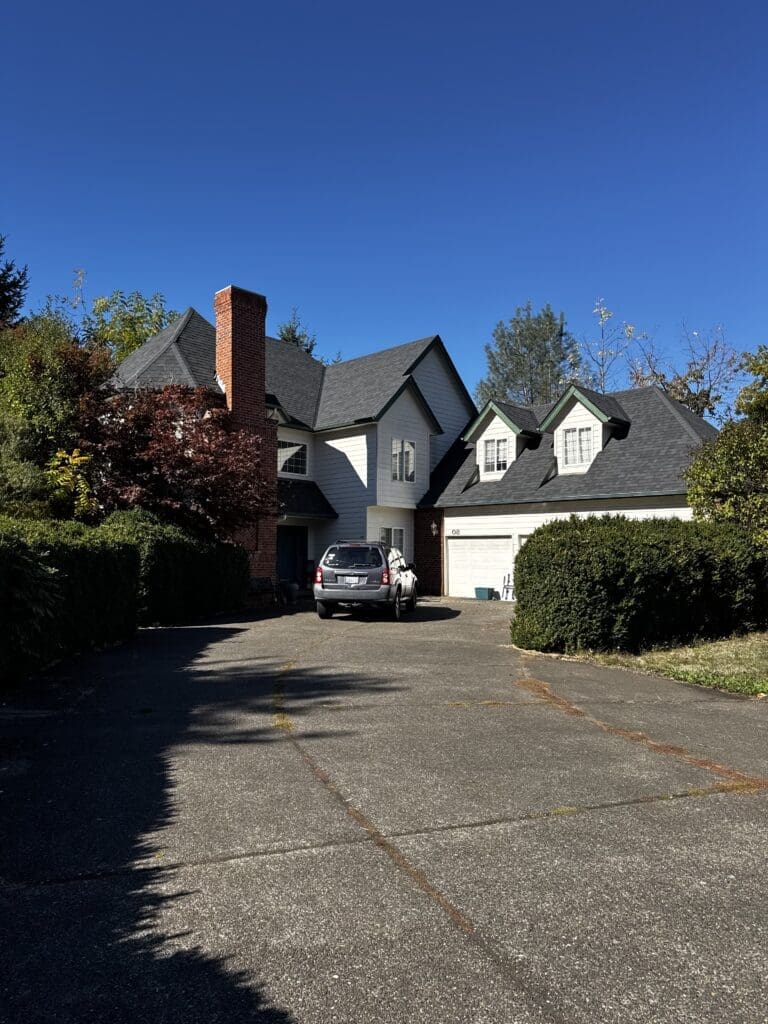
In 2023 I saw a true bidding war happen in North Bothell, right by where I live. It was a home I wanted to purchase myself. I put in a competitive bid on a home that needed work, to say the least. It was a charming 1940s built home, whose lovely inhabitants were just as charming. They lived in that home until their passing. Their kids no longer lived nearby, and they wanted top dollar.
I wanted to take a home with charm and renovate it to its former glory, with some amazing material updates, and proper electrical and plumbing while I was at it. What I thought was a fair offer was quickly outbid in a multiple offer scenario. The home ended up going for $350,000 over asking, with much of that happening because of an escalation clause two offers had. Each clause said that when one person bid higher, they would go $5,000 higher, up to a certain point. That's just what happened, until one person's point was higher than the other, and they won out by $5,000.
The home today? Not worth the same amount that was paid for it, and it hasn't been touched by the new owners. That's a sore subject for me, but a lesson for you. Escalation clauses are great when they win. And you can still lose when you win.
Here's what I would say about that story to anyone getting ready to write an offer with an escalation clause attached to it. The clause did exactly what it was designed to do. It won the house. What it didn't do was protect the buyer from paying more than the house was actually worth. Those are two different jobs, and only one of them is the clause's responsibility. The other one is yours.
What Is an Escalation Clause, Exactly?
An escalation clause is a provision added to your purchase offer that automatically increases your price if the seller receives a higher, verified competing offer. Instead of guessing what the highest bidder might pay and opening with that number, you name three things: a starting offer, an increment you're willing to beat a competitor by, and a maximum price you will not go above.
Say you offer $700,000 on a home, with an escalation clause that beats any competing offer by $5,000, up to a cap of $750,000. If another buyer offers $720,000, your offer automatically becomes $725,000. If that same buyer's own escalation clause tops out at $740,000, the math runs until someone hits their ceiling. Whoever is willing to go higher, within their stated cap, wins.
Figures per current NWMLS-sourced Seattle-area market reporting and NWMLS broker forms guidance as of 2026. Confirm current multiple-offer activity for your specific target neighborhood before writing an offer, since it shifts month to month.
How an Escalation Clause Works in Washington State
Here in Washington, an escalation clause is almost always attached using the Northwest Multiple Listing Service's Escalation Addendum, commonly known as Form 35E. That form spells out the base offer, the increment, and the cap in writing, and it requires something buyers too often skip: proof.
The Three Numbers, Plus the One Thing People Forget
- The base. What you offer if no competing offer ever shows up. This is the price you actually pay if you're the only one at the table.
- The increment. The fixed amount you'll beat a competing offer by, usually $1,000 to $5,000 around here. It's a flat step, not a percentage.
- The cap. The absolute most you will pay, no matter how high things climb. This number should already match what you've decided the home is worth to you, not what you hope you won't have to pay.
- The proof requirement. A properly written escalation addendum requires the seller's agent to provide documentation of the competing offer before your price actually escalates. Full stop. No proof, no increase.
Set your cap before you fall in love with the house, not after. I meet buyers exactly where they are financially before we ever talk about strategy, because the cap only works as protection if you set it like a budget and not like a wish.
Here's the detail most buyers don't know until it costs them something: the Northwest Multiple Listing Service does not actually recommend using this form. That's not me being dramatic. It's in NWMLS's own broker documentation. The reason is straightforward. When two or three offers each carry their own escalation clause, figuring out the true winning price gets complicated fast, and it's not unusual for a listing agent to counter the form out of the deal entirely and ask everyone for a simple "highest and best" instead.
Are Bidding Wars Back in Greater Seattle?
Not the way they were in 2021 and 2022, and that matters for how you think about a clause like this. Inventory across King and Snohomish counties has climbed meaningfully compared to a year ago, and premiums over asking price on competitive homes have settled into a more modest 3 to 8 percent range instead of the 15 to 20 percent blowouts that defined the pandemic-era peak.
That said, "cooled off" does not mean "gone." Well-priced, move-in-ready homes in strong locations, including plenty of pockets across Bothell, Kenmore, and the broader Eastside, are still drawing multiple offers, especially in the spring and summer season. The North Bothell home I told you about happened in 2023, not 2021, which tells you something. Bidding wars didn't end when the headlines said they did. They just got more selective about which homes they show up for.
Heading Into a Competitive Offer Situation?
I've written a full breakdown of strategy beyond the escalation clause itself, including how to actually decide what to offer.
Read: How to Win a Bidding War in Greater SeattleWhen an Escalation Clause Helps, and When It Hurts You
Here's the honest take. An escalation clause is a tool, not a strategy. It solves exactly one problem: it keeps you from having to guess the winning number in real time. It does not solve the much more important problem of whether the winning number is actually a good idea.
It tends to help when your cap was set using real numbers. Your comparable sales, your actual budget, and what the home is worth to you if you plan to live in it for the next ten years, not what you're willing to pay in the heat of a Tuesday afternoon multiple-offer deadline. Used that way, an escalation clause lets you compete without opening with your highest card, and it can win you a home you would have lost by underbidding out of caution.
It tends to hurt when the cap gets set by adrenaline instead of arithmetic. Two competing escalation clauses can push a sale price to a number neither buyer would have offered outright if you'd asked them cold, sitting at their kitchen table. That's exactly what happened on that North Bothell sale. Two buyers, two clauses, and a final number driven up in $5,000 increments until one person's ceiling was $5,000 higher than the other's. Nobody sat down and decided the house was worth that number. The math decided it for them.
An escalation clause is a legitimate, commonly used tool in Washington's competitive home-buying market, built around a base price, an increment, a cap, and a requirement that the seller prove the competing offer that triggered it. Used with a cap tied to real numbers, it can help you compete without overpaying. Used to chase a win instead of a value, it can put you in a house that costs more than it's worth, the day after you close. Set the number before the moment, not during it.
Frequently Asked Questions
What is an escalation clause in real estate?
An escalation clause is a provision added to a home purchase offer that automatically raises the buyer's price above a competing offer, by a set increment, up to a maximum price the buyer names in advance. It lets a buyer stay competitive in a multiple-offer situation without opening with their absolute highest number. The clause only activates if the seller receives and can document a higher, legitimate competing offer.
How does an escalation clause work in Washington State?
In Washington, an escalation clause typically takes the form of the Northwest Multiple Listing Service's Escalation Addendum, commonly known as Form 35E. The buyer states a base offer, an increment they will beat a competing offer by, and a maximum price. If the seller receives a higher bona fide offer, the seller's agent must provide proof of that competing offer before the escalation clause can be triggered.
Is it smart to use an escalation clause when buying a home in Seattle?
An escalation clause can be smart when it is capped at a number you have already decided you are comfortable paying, regardless of whether you win. It becomes a problem when the cap creeps past what the home is actually worth to you, just because you are chasing the win instead of the value. The clause wins you the house. It does not, on its own, tell you whether the house was worth what you paid for it.
Can a seller lie about competing offers to trigger my escalation clause?
No, not if your escalation clause is written correctly. A properly drafted escalation addendum requires the seller's agent to provide documentation of the competing offer that triggered the increase. If that proof isn't delivered, the buyer's price does not escalate, which is exactly why the wording of the clause matters more than the round numbers inside it.
Does NWMLS recommend using an escalation clause?
No. According to broker guidance published alongside the Northwest Multiple Listing Service forms, NWMLS itself does not recommend the use of the Escalation Addendum, largely because calculating a final price gets complicated fast when multiple offers each carry their own escalation terms. Many listing agents advise their sellers to counter it out of an offer entirely and request a simple highest and best round instead.
Getting Ready to Write a Competitive Offer?
Let's set your real number before you're standing in a driveway with a deadline. I'll meet you exactly where you are, and help you build an offer strategy that fits your actual budget, not just the moment.
Talk to Aaron