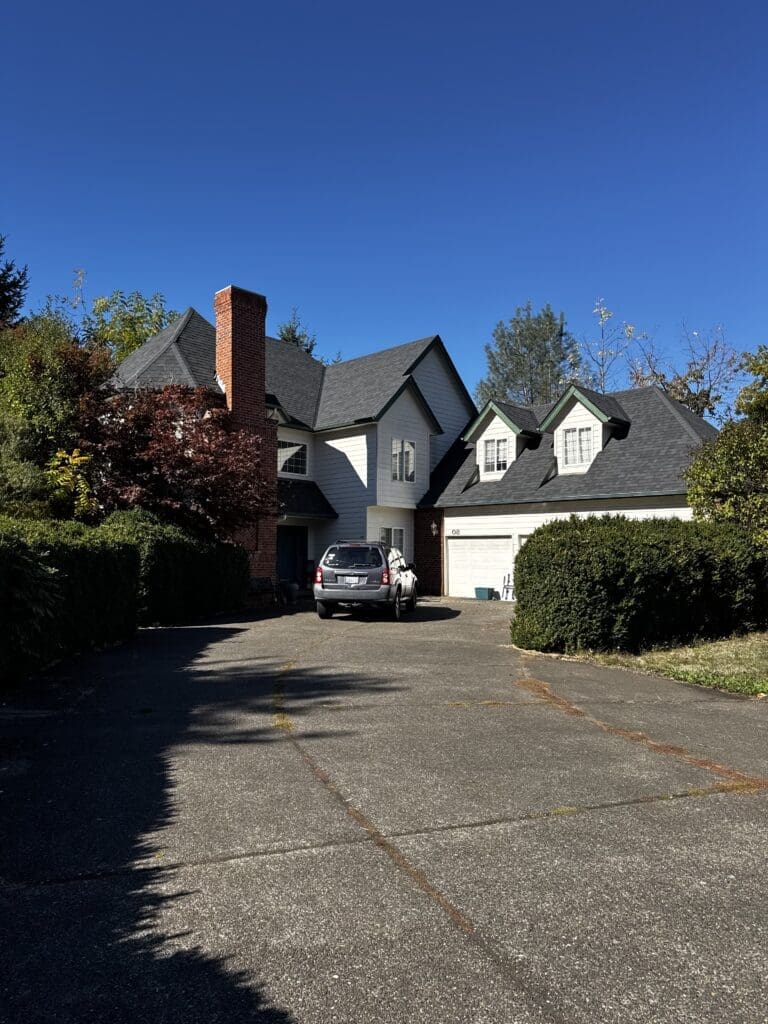
How to Buy a Home with a Low Down Payment on the Eastside
How to Buy a Home with a Low Down Payment on the Eastside
Low down payment options aren't just for first-time buyers anymore. They're making homeowners out of people who never thought they could buy in Seattle and the Eastside, including buyers with plenty of money, just not in cash.

What to Know About Low Down Payment Buying on the Eastside
- Not just first-time buyers: Low down payment strategies increasingly serve asset-rich, cash-conscious buyers, not only entry-level buyers reaching for 3-5% down.
- The jumbo threshold: Any King County loan above $1,063,750 in 2026 is a jumbo loan, and jumbo lending has its own low-down-payment options.
- No PMI, no problem: A number of jumbo lenders now offer 10% down with no traditional mortgage insurance for well-qualified borrowers.
- The real question: It's not "how much can I put down," it's "how much of my liquidity actually belongs in the house."
Here's a phrase I hear constantly on the Eastside, usually from someone who assumes it doesn't apply to them: low down payment. People picture a first-time buyer scraping together 5%. What they don't picture is a Microsoft or Amazon employee sitting on a substantial equity compensation package, who could technically write a 20% check, but really doesn't want to.
Don't take my word for it. I asked Petros Christophilis, mortgage broker from Team Petros, someone I've trusted personally and professionally for over a decade, to share a client story and his expert take on exactly this.
Low Down Payment Isn't Just a First-Time Buyer Thing Anymore
Low down payment options are also making homeowners out of people who never thought they could, or should, buy in Seattle and Eastside cities. Not because they lack the money. Because the money they have is tied up somewhere that's working hard for them already, and pulling it out to hit an arbitrary 20% comes with its own cost.
That's a different conversation than the one most people expect when they hear "low down payment." It's not about qualifying with less. It's about strategy, and it applies just as much to a buyer with a seven-figure investment account as it does to someone buying their very first condo.
Conforming vs. Jumbo: What the Numbers Actually Are on the Eastside
Before getting into strategy, it helps to know where the lines actually sit, because "jumbo loan" gets thrown around loosely and most buyers don't know their actual threshold.
Figures per current 2026 Federal Housing Finance Agency (FHFA) conforming loan limit data and mortgage-industry reporting. Loan limits update annually and specific down-payment programs vary by lender; confirm current numbers and eligibility with your mortgage broker before assuming any figure applies to your situation.
Any loan above $1,063,750 in King County crosses into jumbo territory. On the Eastside, where median prices in cities like Bellevue and Kirkland routinely put total loan amounts above that line, a huge share of buyers are shopping in jumbo territory without necessarily thinking of themselves as "jumbo buyers." That matters, because jumbo lending has its own, separate menu of low-down-payment options, and most buyers never ask about them.
Petros's Client Story: Keeping the Portfolio Intact

We worked with Eastside buyers who had significant assets tied up in company stock and investments but didn't want to liquidate a large portion of their portfolio just to reach a traditional 20% down payment. By using a low-down-payment jumbo option with no mortgage insurance, they were able to purchase the home they wanted while keeping more of their investment portfolio intact. For them, it wasn't about having less money to put down, it was recognizing that selling appreciating assets, potentially creating a tax event, and giving up future market growth could ultimately cost far more than putting less down on the home.
Industry Leader Quote"One of the biggest misconceptions I see with Eastside buyers is that a high home price automatically means you need a massive down payment. For buyers with strong income and credit, the better question isn't always 'How much can I put down?', it's 'How much of my liquidity actually makes sense to put into the house?'"
Visit Team Petros →Here's what I'd add to that from the real estate side. I've watched buyers talk themselves out of a home they could genuinely afford because they were fixated on hitting 20% down, as if it were a rule instead of a preference. It's not a rule. It's one option among several, and for a buyer whose wealth lives in a stock portfolio instead of a checking account, it's often not even the smart option.
Comparing What Your Budget Actually Buys?
Once your financing strategy is set, the next question is where it takes you. I've broken down price points across the Eastside's top cities.
Read: What $2 Million Gets You on the EastsideHow Low Down Payment Jumbo Financing Actually Works
A Few Common Paths, in Plain English
- Low-down-payment jumbo with lender-paid risk pricing. Some jumbo lenders now offer 10% down with no traditional PMI, pricing the added risk into the interest rate or loan structure instead of charging a separate mortgage insurance premium.
- Piggyback structures (80-10-10 or 80-15-5). The first mortgage is kept at 80% of the price to avoid PMI entirely, a second loan covers most of the remaining balance, and the buyer's cash covers the rest, typically 5-10%.
- Credit and reserve requirements. These programs generally reward strong credit, often 700-740 or higher, and require documented cash reserves, since the lender is taking on more risk than a standard 20%-down conforming loan.
Ask your lender directly whether a low-down-payment jumbo option makes sense for your specific asset mix before you assume you need to liquidate anything. The math is different for every buyer, and it's a conversation, not a form to fill out.
Is a Lower Down Payment Right for You?
Here's the honest take. A lower down payment isn't automatically the smart move, and it isn't automatically the risky one either. It depends entirely on what your money is doing right now, and what it would stop doing if you moved it into a house.
It tends to make sense when your assets are appreciating, when selling them would trigger a real tax consequence, or when you'd simply rather keep your investment strategy intact than reroute it into home equity. It tends to make less sense if your "extra" liquidity isn't actually doing much for you sitting where it is, in which case the traditional math around avoiding mortgage insurance and lowering your monthly payment might win out. That's exactly the kind of conversation worth having with your lender before you assume either path is the obvious one.
Low down payment strategies on the Eastside aren't limited to first-time buyers reaching for 3-5% down. A meaningful number of jumbo lenders now offer 10% down with no traditional PMI, giving asset-rich buyers a way to purchase without liquidating appreciating investments or triggering a taxable event. The right down payment isn't the biggest one you can manage. It's the one that reflects what your liquidity is actually worth doing somewhere other than your house.
Frequently Asked Questions
Can you buy a home on the Eastside with less than 20% down?
Yes. Both conforming and jumbo loan programs on the Eastside offer options below 20% down. Conforming loans under the 2026 King County limit of $1,063,750 can go as low as 3-5% down, and a growing number of jumbo lenders now offer 10% down with no traditional mortgage insurance for well-qualified borrowers.
What is the 2026 conforming loan limit in King County?
The 2026 conforming loan limit for a single-family home in King County is $1,063,750, higher than the national baseline of $832,750 because King County is designated a high-cost area by the Federal Housing Finance Agency. Loan amounts above that figure are considered jumbo loans.
Do jumbo loans always require 20% down?
No. While 20% down remains common on jumbo loans, a number of lenders now offer jumbo financing with as little as 10% down, and some go even lower, without requiring traditional private mortgage insurance. These programs price the added risk into the rate or loan structure instead.
Why would a wealthy buyer choose a low down payment instead of paying 20% down?
A buyer with significant assets in company stock or investments may choose a lower down payment to avoid liquidating appreciating assets, triggering a taxable event, or giving up future market growth. In many cases, the cost of a slightly higher mortgage rate or fee is smaller than what would be lost by selling investments to reach 20% down.
Is a low down payment jumbo loan only for first-time buyers?
No. Low-down-payment options are increasingly used by repeat buyers and high-income, asset-rich buyers who want to preserve liquidity and keep their investment portfolios intact, not just by first-time buyers trying to reach an entry-level down payment.
Not Sure Which Down Payment Strategy Fits Your Situation?
Let's talk through what your assets look like and what actually makes sense to put into a house. I'll connect you with Petros directly, and we'll build the strategy together.
Talk to Aaron