The Pros and Cons of Living in Ballard, Seattle: Commute, Culture, and Home Prices
The Pros and Cons of Living in Ballard, Seattle: Commute, Culture, and Home Prices
The running joke is that when you move to Ballard, you better make friends in Ballard. Here's what no one tells you about the neighborhood people move to and never leave.
There is a running joke in Seattle. When you move to Ballard, you better make friends in Ballard. Because your current friends will not visit. It's too far, they say.
Ballard locals know the truth: it's a hop and a skip away. They just say that.
Here is what I would say about this joke. It is not really about distance. It is about what Ballard does to a person once they land there. The neighborhood is so complete, so genuinely self-contained, that leaving it starts to feel optional. Not because you are stuck. Because you have everything you need within walking distance, including a local movie theater where the neighbors vote on the cult classics, a Sunday Farmers Market that people travel in from other neighborhoods to visit, a bar crawl scene on Friday and Saturday nights that competes seriously with Capitol Hill, the Ballard Locks pulling global visitors in from everywhere, Golden Gardens Park right at the end of the line, and a community that will rally behind a local spot the way Ballard did for Baker's bar and restaurant when it needed the neighborhood to show up.
That is Ballard. That is what relocating buyers need to understand before they decide whether it fits them or not.
The Joke, and Why It's Wrong
Every city has its version of this. The neighborhood so culturally rich, so geographically distinct, that outsiders convince themselves it requires an expedition. In Seattle, that neighborhood is Ballard.
I have driven a lot of Seattle. Seven years of Lyft routes will do that. I have picked people up from Ballard at all hours on all days, and I can tell you from firsthand experience: the people leaving Ballard are almost always going somewhere for a specific reason, a concert, an airport run, a work obligation they cannot get around. And they come back quickly. The people who move to Ballard tend to stop thinking of the rest of Seattle as somewhere they need to be on any regular basis. That is not geographic isolation. That is what a genuinely complete neighborhood does to you.
The relocating buyers I talk to from California and New York often land in Ballard and feel something they were not expecting. They feel like they are in a neighborhood. Not an urban corridor. Not a transit-adjacent development zone. A neighborhood, in the old sense of the word. Where people know the owners of the places they go. Where the theater has been running since 1914. Where the Farmers Market happens rain or shine, every Sunday, and has for decades.
That is worth understanding before you evaluate the commute math.
The Pros of Living in Ballard
The Neighborhood Is Genuinely Complete
Ballard has everything you need within walking distance. Grocery stores, coffee shops, breweries, restaurants spanning Ethiopian to Hawaiian to modern American, a nationally recognized Farmers Market running every Sunday year-round, the Majestic Bay Theatres operating since 1914, independent boutiques along the historic Ballard Avenue National Historic District, the Nordic Museum, and Golden Gardens Park as the neighborhood's western anchor on Shilshole Bay. For relocating buyers from New York or San Francisco who want walkable, genuine urban-village density, Ballard delivers it.
The Brewery and Nightlife Scene Is Legitimately Exceptional
Ballard has one of the best Friday and Saturday bar crawl scenes in Seattle, second only to Capitol Hill. The Ballard Triangle alone concentrates Stoup Brewing, Reuben's Brews, and Lucky Envelope Brewing in a small walkable radius. Georgetown Brewing, Elysian, Great Notion, and others extend the reach. The Tractor Tavern and venues along Ballard Avenue run live music throughout the week. This is not manufactured nightlife. It grew organically from a neighborhood that has always known how to drink well.
Golden Gardens, the Locks, and the Outdoor Access Story
Golden Gardens Park sits at the northwest end of Ballard on Shilshole Bay with a sandy beach, views of the Olympic Mountains, bonfire pits, and an off-leash dog area. The Hiram M. Chittenden Locks, which connect Puget Sound to Lake Union, are a free public attraction that draws visitors from around the world and remains one of the most genuinely interesting places in Seattle for anyone who has not seen boats raise and lower through a working lock. The waterfront promenade connecting the two is one of the better walking routes in the city. Ballard's outdoor access is not incidental. It is a core part of the neighborhood's daily life.
Community That Actually Acts Like One
Ballard is the kind of neighborhood where locals will rally to save a place that matters to them. Baker's bar and restaurant is the recent proof of that. When a beloved local spot needs the community to show up, Ballard shows up. The Sunday Farmers Market is another version of the same thing: not a tourist amenity, a genuine community ritual that people from other Seattle neighborhoods come to visit. The Majestic Bay runs cult classics chosen by the neighbors. The Ballard SeafoodFest, the Ballard Jazz Festival, the Ballard Art Walk all run on the same energy. This is not a neighborhood of passive residents. It is one of the more active community cultures in Seattle.
Ballard Link Extension on the Long Horizon
Sound Transit's Ballard Link Extension, approved by voters in 2016, will add 7.7 miles of light rail service from Chinatown-International District through downtown Seattle and Interbay to Ballard. Per Sound Transit's project page, the start of service is currently targeted for 2039, with the full project in environmental review and final design. That is a long horizon. But forward-thinking buyers are already pricing the transit connectivity improvement into long-term decisions about Ballard real estate.
The Cons of Living in Ballard
The Commute to Amazon and Microsoft Is Real Work
If you are relocating for Amazon's South Lake Union campus or Microsoft's Redmond campus, Ballard's commute is a meaningful factor. Ballard is in the northwest corner of Seattle. Amazon's Day 1 buildings are in South Lake Union, roughly 30 to 45 minutes by car depending on traffic. Microsoft in Redmond sits on the other side of the lake. Bus routes 40 and 17 connect Ballard to downtown and Westlake, where you can transfer to regional transit for Eastside commutes. Microsoft does operate a Connector stop in Ballard. But this is not a fast commute in either direction. If you are making the trip daily and do not plan to drive, account for it honestly before you decide on the neighborhood.
The Price Point Is Real
Ballard prices at or slightly above Seattle's overall median. Redfin reported a median sale price of $850,000 in January 2026, up 1.2% year over year. More recent data from Orchard shows a 30-day median around $864,900. Popach and Co.'s June 2026 analysis places Ballard in the $852,000 to $975,000 range depending on property type, with turnkey single-family homes still drawing multiple offers. This is not a place where you find underpriced real estate. The neighborhood's desirability is fully reflected in what things cost. NWMLS data is the authoritative benchmark and should be confirmed before any decision.
Light Rail Is 2039. Not 2026.
The Ballard Link Extension is real, it was voter-approved, and Sound Transit is advancing it through environmental review. But per Sound Transit's current project timeline, service does not start until 2039. There is also a noted funding gap between what has been committed to and the full Ballard-to-SODO build. For buyers who are evaluating Ballard on the assumption that light rail connectivity is imminent, that assumption needs to be adjusted. In the meantime, the neighborhood is bus-dependent for its connection to the broader transit network. That works well for many Ballard residents. It is worth knowing clearly before you make a decision based on transit.
The Joke Is a Little Bit True
Getting to Ballard from the south end of Seattle, from Capitol Hill, from Columbia City, or from across the lake is genuinely not fast. The geography of northwest Seattle, bounded by water on multiple sides, means there is no shortcut that does not exist. If your social life, your work, or your daily obligations are concentrated in other parts of the city, Ballard will require you to be intentional about getting there and back. That is a real trade-off. The people who are happiest in Ballard are generally the ones who have built their lives around the neighborhood rather than treating it as a base for ranging across the city.
The Commute Question: Honest Answer
Here is what I would say to every relocating buyer who is evaluating Ballard while working at Amazon or Microsoft.
Downtown Seattle and South Lake Union: Bus routes 40 and 17 connect Ballard to downtown in roughly 25 to 40 minutes depending on time of day and route. For Amazon employees working in South Lake Union, this is a real but manageable commute by transit. The Rapid Ride D Line and Route 40 run frequently enough to make car-free commuting viable for the right person.
Microsoft Redmond: This is a longer conversation. Microsoft does operate a Connector shuttle with a stop in Ballard, which is the most direct transit option for employees. By car, you are looking at 30 to 50 minutes across the lake in non-peak conditions, longer during peak commute windows. By public transit without the Connector, it is a multi-leg trip involving a downtown transfer. If you are a Microsoft employee who will commute daily and does not want to drive, Ballard is not the optimal base. If you are Microsoft and planning to drive, Ballard works but requires you to account for the Lake Washington crossing in your timing.
Price data per Redfin and Orchard as of early 2026. NWMLS is the authoritative data source for all pricing decisions. Sound Transit timeline per soundtransit.org, May 2026. Verify all data before making financial decisions.
Home Prices in Ballard: What You Are Actually Shopping For
Ballard's housing stock has more variety than most people expect when they first look at the neighborhood.
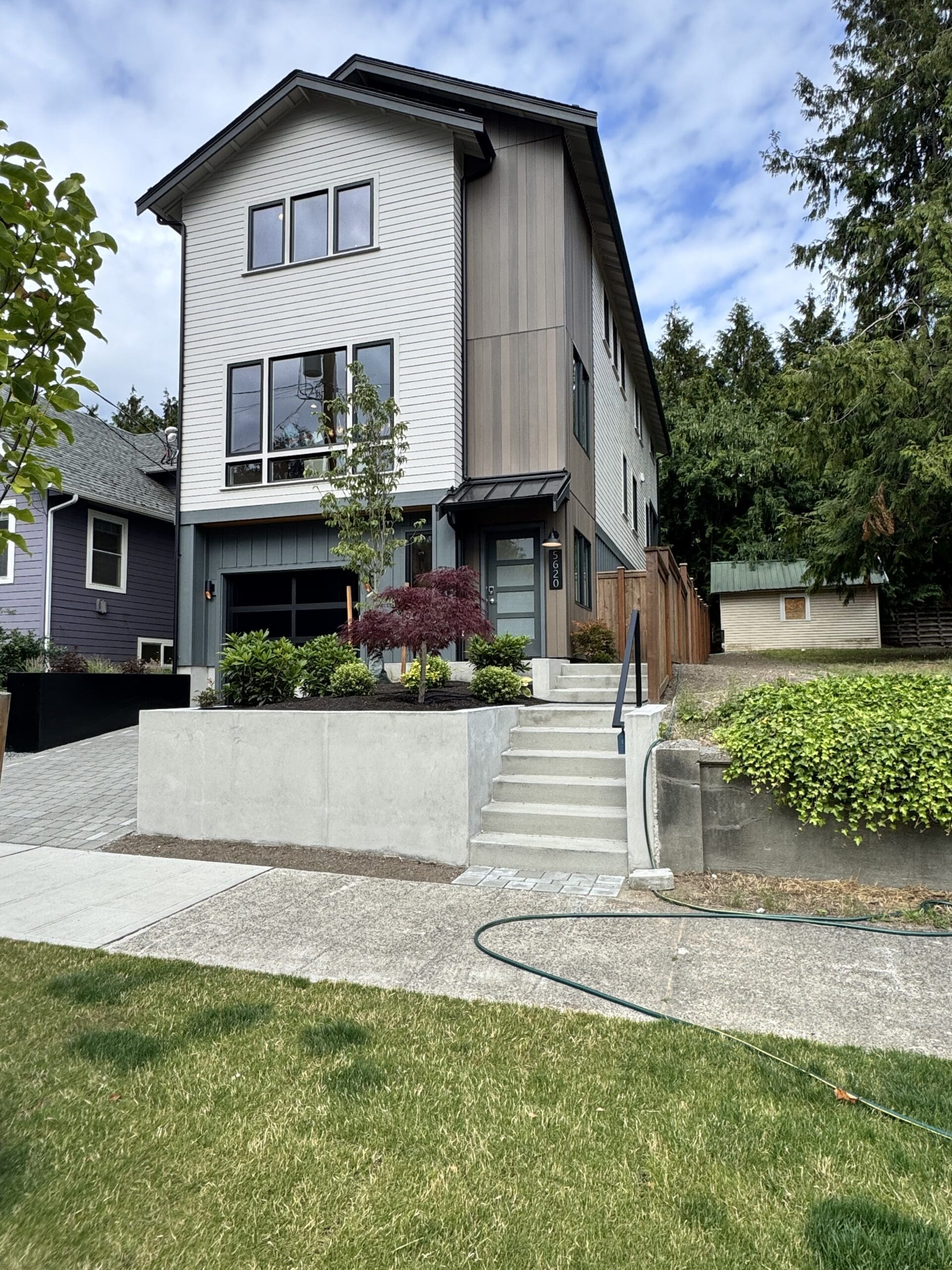
The historic core along Ballard Avenue and the blocks radiating from it include Craftsman bungalows, pre-war cottages, and single-family homes that carry genuine character. These represent the inventory that drew the original wave of buyers who gentrified Ballard over the past two decades, and they remain among the most coveted in the city for buyers who want older homes with character in a walkable urban context.
Newer construction has added condos, townhomes, and multifamily development across the neighborhood, particularly in the areas further from the historic district. These bring Ballard's price floor down somewhat relative to the single-family market, giving first-time buyers and condo buyers a path into the neighborhood that does not require an $850,000 budget.
Per Every Door Real Estate's 2026 market analysis, Ballard and Queen Anne hold firm even during slower market periods, reflecting deep buyer interest in walkable, amenity-rich communities close to downtown. HomePro Associates' June 2026 Seattle market update confirms that well-located, move-in-ready homes in Ballard are still going under contract within one to two weeks when priced correctly.
Relocating to Seattle and Comparing Neighborhoods?
I can walk you through Ballard against every alternative you are considering. That is exactly where the conversation should start.
Talk to Aaron Relocation GuideWho Ballard Is Actually For
Ballard is the right neighborhood for buyers who want to live inside their neighborhood, not in it while they go everywhere else.
If your work is in downtown Seattle, South Lake Union, or at Boeing Field, the commute from Ballard is manageable by transit or car. If your work is in Redmond or Bellevue and you are not planning to drive, the commute math requires an honest conversation before you commit.
If you are relocating from New York or San Francisco and what you are looking for is genuine walkability, a neighborhood with independent businesses and actual community character, a grocery run that does not require a car, and a nightlife scene built on craft beer and live music rather than velvet ropes: Ballard is the Seattle neighborhood that most closely matches what you are describing.
If you are coming from a more suburban environment and prioritizing space, square footage, and ease of car-based living: Ballard will feel expensive for what you get. There are better options for that profile in Bothell, Kenmore, or Woodinville, where your budget goes further and the trade-off is deliberate rather than accidental.
The people who are most consistently happy in Ballard are the ones who moved there and stopped thinking of it as a compromise. Because it is not one. It is a choice. And it's a good one for the right person.
The pros and cons of living in Ballard, Seattle are real and they are worth evaluating honestly. The community, the culture, the walkability, and the outdoor access are among the best in the city. The commute to the Eastside, the light rail timeline, and the price point require clear eyes. What Ballard offers is not a place to live while you figure out Seattle. It is a place to land, put down roots, and build a life around a neighborhood that will meet you back. That is worth the hop and the skip. Live well. Real Estate better.
Frequently Asked Questions
What are the pros and cons of living in Ballard, Seattle?
The pros of living in Ballard, Seattle include a genuinely complete, walkable neighborhood with year-round access to the Ballard Farmers Market, Golden Gardens Park, the Hiram M. Chittenden Locks, an exceptional brewery and bar scene, the Majestic Bay Theatres (operating since 1914), and a strong local community culture. The cons include a median home price around $850,000 to $975,000 depending on property type (verify with current NWMLS data), a bus-dependent commute that can be lengthy for workers commuting to Redmond or Bellevue, and a light rail connection that is not projected to arrive until 2039 per Sound Transit's current timeline. Ballard is best suited for buyers who want to live within their neighborhood rather than use it as a launch point for commuting across the city.
What is the average home price in Ballard Seattle?
Ballard median home prices as of early 2026 are in the range of $850,000 to $975,000 depending on property type and source. Redfin reported a median sale price of $850,000 in January 2026, up 1.2% year over year. Orchard's 30-day data shows a recent median closer to $864,900. The Popach and Co. June 2026 Seattle market update places the Ballard range at $852,000 to $975,000 for homes, with turnkey properties still attracting multiple buyers. NWMLS data is the authoritative benchmark for all pricing decisions in this market and should be confirmed with a licensed real estate agent before making any purchase decision. Roughly 39.7% of Ballard homes sold above list price in a recent 30-day period per Orchard, indicating the neighborhood remains competitive for well-priced, move-in-ready homes.
Is Ballard Seattle a good neighborhood to live in?
Ballard is widely considered one of Seattle's best neighborhoods for people who want walkable, amenity-rich urban living with a strong community identity. The neighborhood has a nationally regarded Sunday Farmers Market, a dense concentration of craft breweries, Golden Gardens Park on Shilshole Bay, the Ballard Locks as a community landmark, and a historic commercial district along Ballard Avenue. According to Every Door Real Estate's 2026 market analysis, Ballard holds firm in value even during slower market periods, reflecting durable buyer demand. It is best suited for buyers whose work and social life are concentrated in northwest Seattle or downtown, rather than commuters who need to reach the Eastside daily.
How far is Ballard from downtown Seattle?
Ballard is approximately five to six miles from downtown Seattle by road. By bus, the Route 40 and Route 17 connect Ballard to downtown Westlake and South Lake Union in roughly 25 to 40 minutes depending on time of day. The Rapid Ride D Line provides additional frequency along 15th Avenue NW. By car, the drive to downtown varies from 15 minutes in off-peak conditions to 40 or more minutes during peak morning and evening commute windows. Ballard does not currently have light rail service. Sound Transit's Ballard Link Extension, which will add light rail from downtown Seattle through Interbay to Ballard, is projected to begin service in 2039 per Sound Transit's current project timeline.
Is Ballard Seattle good for people relocating from California or New York?
Ballard is one of the Seattle neighborhoods most frequently cited by relocating buyers from New York and California as matching what they were looking for. The walkability, independent business density, farmers market culture, and strong neighborhood identity translate well for buyers coming from cities where walkable urban living is the baseline. The price range, with median home prices around $850,000 to $975,000 as of early 2026, is lower than comparable neighborhoods in San Francisco or New York while offering similar neighborhood character. The main adjustment for tech workers relocating for Amazon or Microsoft is the commute: Ballard sits in the northwest corner of the city and the drive or transit to Redmond requires meaningful planning. Buyers commuting to Amazon's South Lake Union campus have a shorter and more manageable transit connection via Route 40 or 17.
When is the Ballard Link Extension light rail expected to open?
Sound Transit's Ballard Link Extension is currently projected to begin service in 2039 per Sound Transit's official project page as of May 2026. The project was approved by voters in November 2016 as part of Sound Transit 3 and will add 7.7 miles of light rail connecting Chinatown-International District, downtown Seattle, Interbay, and Ballard via nine new stations. The project is currently in environmental review and final design. Sound Transit has noted an affordability gap between the funding committed to the full project and the cost of the Ballard-to-Seattle Center segment. Buyers making Ballard real estate decisions based on anticipated light rail connectivity should account for the 2039 timeline and the project's current status rather than assuming service is imminent.
Thinking About Making Ballard Your Seattle Home Base?
Let's talk through whether it fits the life you are building here. That is where we start.
Talk to Aaron