
Why Real Estate Photography Is Its Own Discipline
Real Estate photography Seattle. A guest contribution blog from Townley Photography: shared here because this is exactly the kind of thing I wish more sellers knew.
Same Eye, Different Subject: Real Estate Photography vs Portrait Photography
A guest contribution from Spencer Townley of Townley Photography

Here's a question I get more than you'd expect: If you photograph people, can you photograph my house? The short answer is yes. The longer answer is that photographing a home well requires a completely different process, a different set of decisions, and a different definition of success than photographing a person. Both take technical skill and artistic judgment. But the methods, priorities, and storytelling goals are almost entirely different, and understanding that difference is part of what makes listing photography work.
What Changes When the Subject Is a Home
In portrait work, the goal is connection. You're reading a person for their posture, their expression, the way they hold tension in their shoulders, and making decisions in real time to draw something genuine out of them. The camera is a social tool as much as a technical one. Lighting, lens choice, and camera angle all work in service of a human face and the story behind it.
Real estate photography doesn't work that way. A room can't relax. A kitchen can't make eye contact. The subject is fixed, and the photographer's job is to work around it, reading the space, solving for light, and making choices that communicate layout, proportion, and livability to someone who has never stood inside those walls.
Lighting Strategy
Portrait lighting follows the subject. Real estate lighting follows the room. In a shoot with a person, you build light around their face and figure. In a property shoot, you're balancing ambient light from windows against interior light levels, often managing extreme contrast between a bright Pacific Northwest afternoon and a darker interior. That usually means multiple exposures blended in post, off-camera flash used to fill shadows without flattening the space, and a careful approach to window views so they don't blow out into white rectangles.
The Pacific Northwest adds its own layer to this. Overcast skies are common, and while they're ideal for portraits, soft, even, flattering, they create flat, grey window light that needs to be managed carefully in interiors. Making a home feel bright and welcoming when the sky outside is the color of concrete is a skill that takes real practice.
Lens Selection and Camera Height
Portrait work typically calls for longer focal lengths (85mm to 135mm) that compress distance and flatter the subject. Real estate photography runs almost entirely on wide-angle lenses, usually in the 16–24mm range, that expand the sense of space in a room. Used well, a wide lens shows a room as it feels to stand in it. Used carelessly, it produces distortion that makes walls bulge and corners look wrong, which is why lens correction and careful camera placement matter so much in post-production.
Camera height is another variable that shifts completely. Portrait photographers typically shoot at eye level with the subject, or slightly above. In real estate, the standard is roughly 5 feet, just above countertop height, which shows floors without cutting off ceilings, and creates the clean, grounded perspective buyers expect to see in listing images.
Preparing the Subject
Before a portrait session, I'm thinking about wardrobe, location, and how to help someone feel at ease. Before a property shoot, I'm thinking about whether the blinds are at the right height, whether the counters are clear, whether the pillows on the sofa are positioned well, and whether there's a garden hose visible in the backyard that needs to move before I shoot the exterior.
Directing a person means drawing out something that's already there. Preparing a space means staging and editing a physical environment temporarily, so it reads clearly in two dimensions. Different instinct, different eye.
Editing Priorities
Portrait editing focuses on skin tones, light shaping, and the subtle work of making a person look like the best version of themselves. Real estate editing is about accuracy, color balance, and clarity. Buyers need to trust what they see so the goal isn't to make a home look better than it is, but to make sure the photography captures what it genuinely looks like on a good day, in good light, from the right angle. Overcooked real estate photos are easy to spot and they erode buyer confidence. Clean, honest, well-composed images hold up better under scrutiny.
Why Professional Real Estate Photography Matters in the Greater Seattle Market
Most buyers in the Greater Seattle area form their first impression of a property online, often on a phone, often before they've spoken to an agent. The photos they see in those first few seconds determine whether they keep scrolling or take the next step. That's a narrow window, and it's not the place for mediocre images.
This market is visually competitive. Homes in Kirkland, Sammamish, Redmond, and Bothell regularly list alongside dozens of other well-presented properties. When listing images are dark, distorted, or carelessly composed, they signal something, even to buyers who can't name exactly what they're seeing. When images are clean, well-lit, and carefully framed, they invite buyers in.
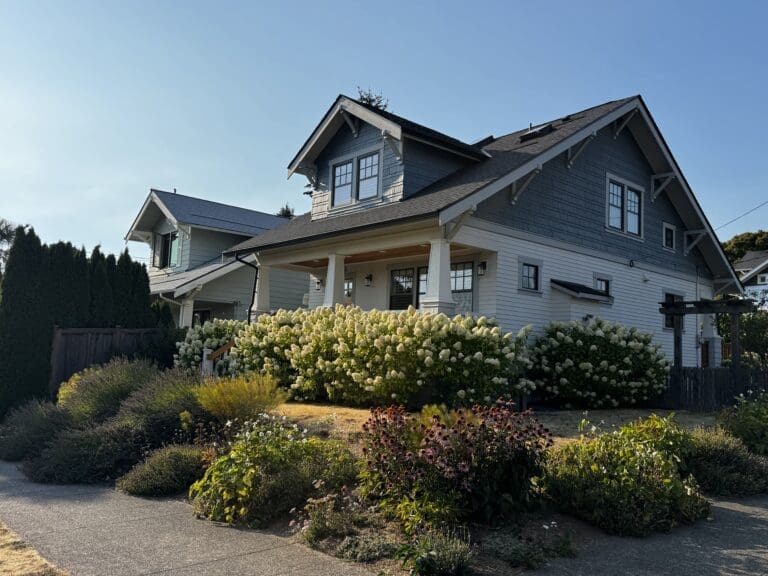
There are also specific visual priorities that matter in the Pacific Northwest. Indoor-outdoor connection, the relationship between interior spaces and the landscape outside, is a meaningful quality in homes here, and it photographs well when handled deliberately. Natural light is a selling point. Views matter. Greenery, landscaping, and setting all contribute to how a property is perceived, and they all require thoughtful composition to show at their best. Also, golden hour is my favorite time to photo as it makes any subject shine.
Curious what professional listing photography can do for your next sale? Aaron Robinson works with Townley Photography on listings across the Greater Seattle area. Let's Talk
Drone Photography: Showing What Ground Level Cameras Can't
Some properties tell a better story from above. A home with a large lot, a view, outbuildings, a private setting, or a meaningful relationship to the surrounding landscape often reads more clearly from altitude than from any ground level angle. Aerial imagery can show lot lines in context, reveal how a property sits relative to its neighbors, capture a roofline or driveway approach, and give buyers a sense of the surrounding environment that ground level photos simply can't provide.
One thing worth understanding: commercial drone photography in the United States requires FAA Part 107 Remote Pilot certification. This isn't optional fine print, it's federal regulation, so kinda serious. Flying a drone for compensation without proper certification creates real liability exposure for photographers, agents, and sellers alike. It also means working without the safety standards and airspace authorizations that Part 107 pilots are trained to navigate.
Spencer Townley holds FAA Part 107 certification, which means aerial work on listings is done legally, safely, and with the professionalism that clients and agents should expect. It's the kind of detail that matters most when something goes wrong, and the kind of thing that's worth asking about before you hire anyone to fly over your property.
Working with Aaron Robinson Real Estate
Townley Photography works with Aaron Robinson on listings across the Greater Seattle area, and that collaboration comes down to a shared understanding of what listing imagery is actually for. It's not decoration. It's a marketing asset, one of the first things a buyer sees, and often one of the last things they remember when they're deciding which homes to visit in person.
Aaron's approach to representing sellers is detailed and intentional, and the photography needs to match that. That means showing up prepared, reading each property individually, and delivering images that are clean, accurate, and compelling. Whether the listing is a Bothell craftsman, a Woodinville estate, a Kirkland townhome, or a Sammamish new build, it deserves to sparkle.
The range that comes from working across portraits, residential real estate, exteriors, and aerial photography isn't just a resume line. It's a practical advantage. Different properties call for different approaches, and having a broad visual toolkit means the photography can follow the property, not the other way around.
The Range Is the Point
The same eye that notices light on a person's face notices how afternoon light rakes across hardwood floors. The same compositional instinct that frames a portrait well knows how to frame a room so it reads clearly and honestly. Photography is a single discipline expressed across many subjects, but expressed differently depending on what the subject needs.
At Townley Photography, Spencer works across people, properties, exteriors, and aerial imagery because each one teaches the others. The range isn't a side effect of taking on varied work. It's the point.
If you're preparing to list a property in the Greater Seattle area and want photography that supports a serious marketing effort, we'd be glad to talk through what that looks like for your specific home.
Frequently Asked Questions
Bottom line: Photographing a home and photographing a person both require a skilled eye, but they require different tools, different instincts, and different definitions of a successful image. Working with a photographer who understands that distinction, and can move between both disciplines with intention, is worth considering when your listing's visual presentation is on the line.
Look ready
for your next
chapter.
Spencer Townley is a Greater Seattle photographer specializing in portraits, residential real estate, architectural exteriors, and FAA Part 107 certified drone imagery. He works with agents and sellers across Seattle, Bellevue, Kirkland, Redmond, Bothell, Woodinville, Sammamish, Issaquah, Edmonds, Shoreline, Renton, Mercer Island, and surrounding communities.
Spencer serves as the listing photographer for Aaron Robinson Real Estate, bringing the same intentional approach to every property, from a Kenmore craftsman to a Woodinville estate.
Book Your SessionThinking About Listing in the Greater Seattle Area?
Strong listing photography is one of the first things buyers see and one of the last things they forget. I work with Spencer Townley to make sure your home is represented the right way. Let's talk about what that looks like for your property.
Reach Out to AaronAaron Robinson · Keller Williams Realty Bothell · License #25032471 · Live well. Real Estate better.