
Washington State Real Estate Disclosure Laws: What Sellers Must Disclose
Washington State Real Estate Disclosure Laws: What Sellers Must Disclose
Form 17 isn't about knowing everything about your house. It's about being honest about what you do know, and what you don't.
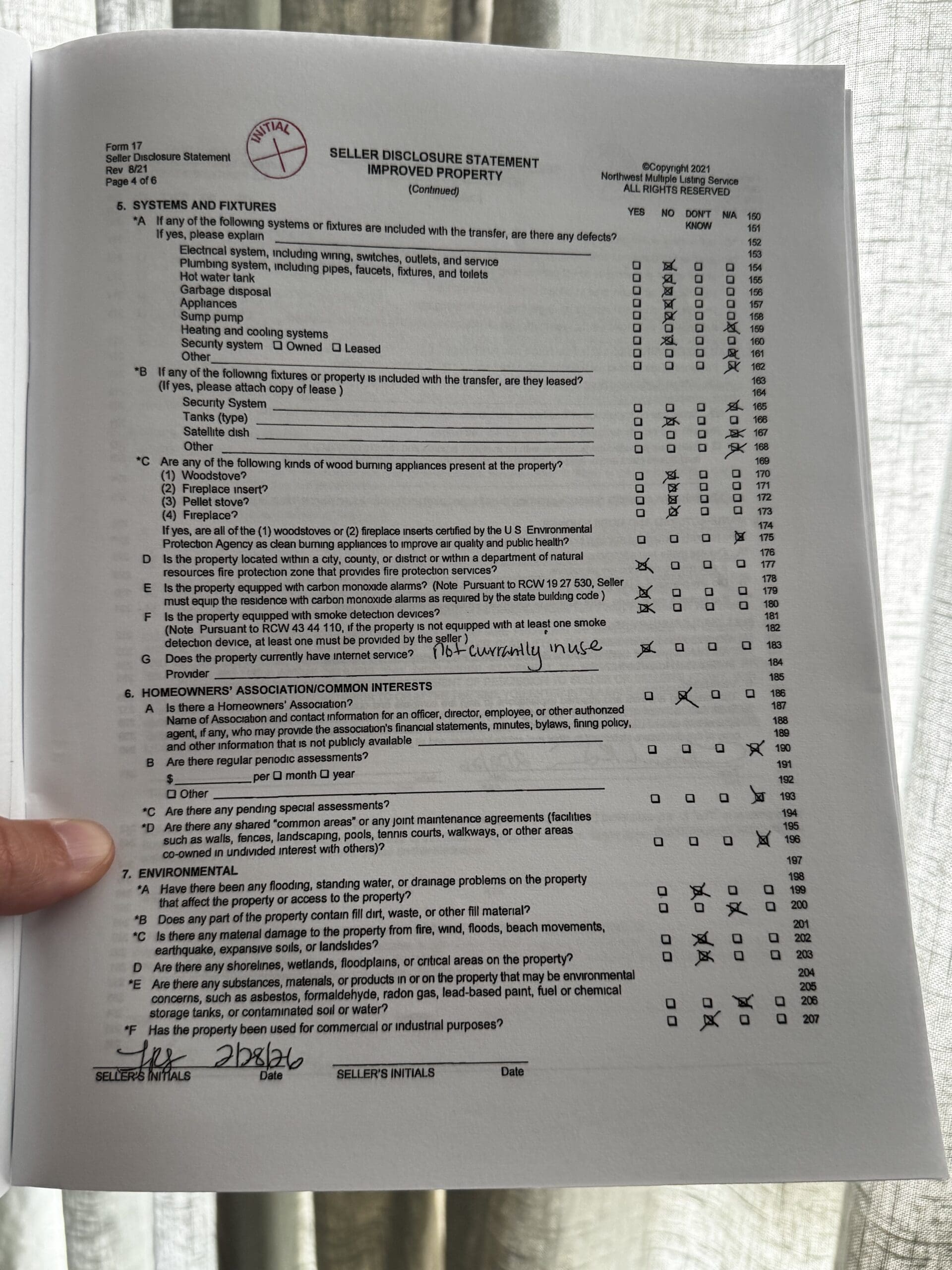
What Form 17 Actually Requires
- Form 17 is Washington's Seller Disclosure Statement, required under RCW 64.06.020 for most residential real estate sales.
- It covers title, structural condition, systems, water and sewage, and environmental issues, including a question about known human burial grounds on the property.
- You are only required to disclose what you actually know. "Don't Know" is a legitimate, legally protected answer.
- The one thing you cannot do is answer dishonestly about something you do know. That's where sellers get into real legal trouble.
- The disclosure must reach the buyer within 5 business days of mutual acceptance, and the buyer then has 3 business days to review it and potentially rescind.
Let's start with the part that always gets a reaction. Form 17's environmental section asks whether you know of any human burial grounds on the property. No, that's not a joke, and yes, sellers are sometimes surprised to see it in writing. And that, in summary, is really what Form 17 is all about. It's about telling a potential buyer everything you know about the property, and just as importantly, being upfront about everything you don't.
What "Don't Know" Actually Protects You From
Here's what I would say about that. Let's face it, we don't know the full history of our homes. We didn't build them brick by brick, board by board. You cannot possibly know about a small leak in the corner of the attic if it hasn't presented itself in any meaningful way during the time you've lived there. And that's okay. You are allowed to not know. That's actual protection for you as a seller, written directly into the law, not just a convenient loophole.
Form 17 gives you three honest answers to choose from on most questions: Yes, No, and Don't Know. "Don't Know" is a real, legitimate response, not a red flag. A buyer's attorney can't hold you liable for something you genuinely had no way of knowing about.
Don't guess to look thorough. If you're genuinely unsure whether something is an issue, "Don't Know" is the accurate and legally sound answer. Guessing wrong is worse than admitting you don't know.
What You Must Always Disclose
Here's the line that matters most. What you must always do is present the things you actually know. If water comes down after hard rains in the winter into your upstairs bathroom, that has to be disclosed, even if you're selling the home in the middle of summer and think "no one can tell." Especially then, honestly.
I tell every seller the same thing when we sit down to fill this out. Because when it comes to disclosure, lying gets you no amount of money, and it usually ends up costing you. A buyer who discovers an undisclosed issue after closing doesn't just get upset, they can pursue you legally, and Washington courts have not been kind to sellers who knew and stayed quiet.
This is one of the few parts of a real estate transaction where the honest path and the smart path are exactly the same path. Full stop.
Form 17 covers a wide range of categories beyond structural issues and water intrusion, including title matters, known easements, water rights, systems like heating and plumbing, and environmental concerns. I am not an attorney, and this post is general information, not legal advice for your specific situation. If you're dealing with a genuinely complicated disclosure question, especially around title, environmental issues, or an inherited property, that's a conversation for a real estate attorney before you sign anything.
Why This Matters Even More in Today's Market
Inventory has climbed meaningfully across King County in 2026 compared to the past few years, and the market has been shifting toward more balance than we've seen recently, according to Northwest MLS data. That shift matters here specifically, because in a market where buyers have more homes to choose from, a clean, honest, well-prepared Form 17 becomes a real point of credibility, not just paperwork. Buyers and their agents are paying closer attention, and a disclosure statement that reads as careful and complete can be the difference between a smooth transaction and a renegotiation after inspection.
Putting your best Form 17 forward starts well before you list. If you want the fuller picture of what to prepare before you put a home on the market, I've covered the most common missteps in The 9 Mistakes Bothell Home Sellers Make, and the case for getting ahead of what an inspector will find in 5 Proven Reasons Pre-Listing Inspections Save You Money.
Getting Ready to List and Not Sure What to Disclose?
Let's sit down and go through Form 17 together before it becomes a problem instead of paperwork.
Talk to Aaron Read: Days on Market in BothellForm 17 is not a test of how much you know about your house. It's a test of whether you're honest about what you do know. "Don't Know" is a legally protected answer when it's true. A known issue, disclosed late or not at all, is where sellers get into real trouble. With more inventory on the market this year and buyers taking a closer look before they commit, a thorough, honest Form 17 is one of the simplest ways to protect yourself and keep your transaction moving.
Frequently Asked Questions
What is Form 17 in Washington State?
Form 17 is Washington's standard Seller Disclosure Statement, required under RCW 64.06.020 for most residential real estate transactions. It asks sellers to disclose known issues with the property across categories including title, structural condition, systems, water and sewage, and environmental concerns, based strictly on the seller's actual knowledge at the time of signing.
Do I have to disclose something I'm not sure about on Form 17?
No, sellers are only required to disclose what they actually know, and "Don't Know" is a legitimate, legally protected answer on Form 17. Sellers are not required to conduct new investigations or inspections to answer the form's questions. What sellers must avoid is answering dishonestly about something they do have actual knowledge of.
What happens if a seller lies on Form 17?
A seller who knowingly provides false information on Form 17 can face legal liability from the buyer after closing. Buyers who discover an undisclosed known defect can pursue legal action, and Washington courts have generally not been favorable to sellers who withheld known issues. This is general information, not legal advice; consult a real estate attorney for guidance on a specific situation.
When does a Washington seller have to provide Form 17 to the buyer?
Sellers must deliver the completed disclosure statement to the buyer no later than 5 business days after the purchase and sale agreement is mutually accepted. Once the buyer receives the disclosure, they have 3 business days to review it and decide whether to rescind the agreement, unless that right has been waived in writing.
Does Form 17 ask about burial sites on the property?
Yes, Form 17's environmental section includes a question asking sellers whether they know of any human burial grounds located on the property. As with other Form 17 questions, sellers only need to answer based on their actual knowledge, and "Don't Know" applies if they genuinely have no information about this.
Preparing to Sell and Want to Get Form 17 Right?
I'll walk through every section with you before it goes to a buyer, so nothing catches you off guard later in the transaction.
Talk to Aaron