
Madison Park vs. Madison Valley: What’s the Difference?
Madison Park vs. Madison Valley: What's the Difference?
Most of Seattle would blank stare at you if you said these were two different places. Here's what's actually different, right down to the price tag.
- A Distinction That Only Matters to the People It Matters To
- Where These Two Neighborhoods Actually Sit
- Madison Park: Lakefront, Established, and Priced Like It
- Broadmoor: The Gated Neighbor Next Door to Madison Park
- Madison Valley: City-Chic and More Attainable
- What the Price Data Actually Shows
- Madison Park vs Madison Valley
- The Bottom Line
Madison Park vs Madison Valley. Here's a distinction that matters, but only in conversation with people it actually matters to. Say those two names to most Seattle residents and you'll get a blank stare, like you just told them Ballard and Fremont were different places. Fair. On a map, they're a few blocks apart, connected by the same street.
But there are clear distinctions here. Ask someone who lives in the gated community of Broadmoor, tucked right up against Madison Park's eastern edge, if their neighborhood is the same as the shops-and-restaurants strip a mile down the hill in Madison Valley. Or ask someone whose home lines the shore of Lake Washington in Madison Park proper. Then there's everyone on the hill or in between, renting apartments and condos, who also call themselves Madison Park people because the name carries more weight at a dinner party.
Plenty has been written about both of these communities. Most of it skips the part that actually matters to a buyer: what things cost, and why. Let's get into it.
Where These Two Neighborhoods Actually Sit
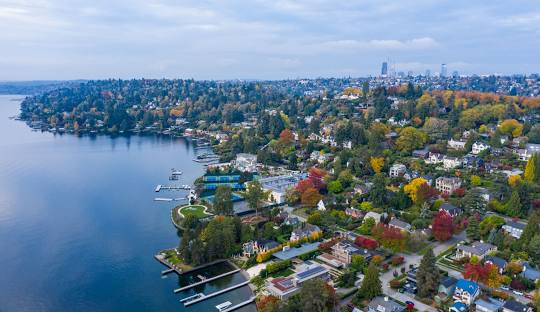
Madison Park sits at the very end of Madison Street, where it dead-ends into Lake Washington. It's the eastern anchor: lakefront, established, walkable in its own small-village way, with a business district of about two blocks that punches way above its size.
Madison Valley sits inland from that, in the low ground between Capitol Hill and Madison Park proper, roughly where E Madison Street runs through the flatter stretch near 28th and 29th Avenue East. It's more of a corridor neighborhood: a walkable strip of restaurants and shops with residential streets fanning out on either side, and it functions as a connector between Capitol Hill, the Central District, and Madison Park itself.
They share a street name and a general direction on the map. That's about where the similarity ends.
Madison Park: Lakefront, Established, and Priced Like It
Madison Park is consistently one of the priciest residential addresses in Seattle. It's lakefront, it's mature, and the tree-lined streets and small commercial strip give it a village feel that a lot of buyers coming from denser parts of the city specifically go looking for. This is where you find estate-scale single-family homes right on the water alongside condo buildings built out over the lake itself along 42nd and 43rd Avenue East.
If a listing in the neighborhood is on Lake Washington directly, that's the number that pulls the average up hard. Everything else in Madison Park, meaning the homes on the hill above the water and the condos in the village core, sits in a wide range below that.
Broadmoor: The Gated Neighbor Right Next Door to Madison Park
This is the correction worth making up front. Broadmoor, the gated golf-course community established in 1927, sits directly against Madison Park's eastern border, not Madison Valley's. It's bounded by the Washington Park Arboretum on one side and Madison Park on the other, wrapped around its own private 18-hole golf course.
Broadmoor is genuinely its own thing. Controlled entrances, roughly 300 homes on private streets, and estate-level pricing that regularly runs from the low millions well into eight figures depending on lot placement and fairway proximity. If someone tells you they live in Madison Park but they actually mean Broadmoor, that's not them being loose with the name. Broadmoor doesn't have its own commercial district, so residents naturally identify with Madison Park's village down the road. It's a distinct enclave that happens to share an address with its more famous neighbor.
Madison Valley: City-Chic and More Attainable
Madison Valley reads completely differently. It's walkable, it's eclectic, and it has that city-chic energy that comes from a genuine mix of single-family homes, townhomes, and small multifamily buildings sitting a short walk from a strip of independent restaurants and shops. William Grose Park anchors part of the neighborhood, and the streets feel more urban-grid than lakeside-village.
It's still a Central Seattle address with all the walkability and access that implies, close to Capitol Hill, a couple miles from downtown, and about a mile from Lake Washington. But it trades lakefront prestige for a more attainable price point and a more varied mix of housing stock, including a real townhome and condo market that Madison Park largely doesn't have outside its lake-adjacent buildings.
Trying to Figure Out Which Central Seattle Pocket Fits You?
I've worked these blocks and I know where the actual value sits, not just the name recognition. Let's talk through what you're looking for.
Talk to AaronHere's what I would say about this to anyone who thinks Madison Park and Madison Valley are interchangeable: they're not, and the people who live in either neighborhood will tell you so pretty quickly if you get it wrong in front of them. I've sat across the table from buyers who assumed a Madison Park search would land them lakefront, and buyers who assumed Madison Valley pricing looked like Madison Park pricing. Neither assumption holds.
What I've learned showing homes in both is that the name people use to describe where they live often has more to do with identity than geography. Somebody renting a condo on the hill will say Madison Park because it carries weight. Somebody in Broadmoor will mention Madison Park too, because that's the neighborhood with the storefronts. Meet people exactly where they are on this, then get specific about the actual streets and the actual price range before anyone makes a decision. That's the job.
What the Price Data Actually Shows
Both of these neighborhoods sell in low volume, which means the monthly median can swing hard depending on which handful of homes closed. That's not a knock on the data, it's just the reality of a small, tightly held market. Here's where things stood most recently, with the caveat that these numbers move.
Figures per Redfin neighborhood market data as of mid-2026. Both neighborhoods sell only a handful of homes per month, so monthly medians can move significantly in either direction. Always verify current figures with NWMLS data or a local agent before making a decision based on a single month's number.
Important Note on These Figures
Small-sample neighborhoods like these are exactly where a single luxury lakefront sale, or a single month with a few starter condos closing, can swing the median by hundreds of thousands of dollars. Treat the numbers above as a directional comparison, not a precise valuation. If you're pricing a specific home in either neighborhood, that's a conversation, not a spreadsheet lookup.
Madison Park vs Madison Valley
This comes down to lifestyle, not budget alone. If lakefront access, a slower village pace, and long-term prestige matter more to you than square footage per dollar, Madison Park is the address. If you want walkability to restaurants and shops, a wider mix of housing types, and meaningfully more home for the money while still being minutes from the lake and downtown, Madison Valley does that job well. And if a private gate and a golf course out your back window is the actual ask, that's Broadmoor's lane specifically, and it comes at Broadmoor's price.
The same kind of split shows up elsewhere in the city. For example, the same kind of split shows up on Queen Anne Hill, and South Seattle has its own version of this comparison. If you're weighing options west of downtown, West Seattle's own distinct sub-markets are worth a look too, and up north, the Ballard vs. Fremont comparison follows a similar logic of shared reputation, very different price tags.
Madison Park and Madison Valley get lumped together in casual conversation, but they're distinct markets with distinct price points. Madison Park is lakefront and priced for it. Broadmoor sits beside it as its own gated, higher-tier enclave. Madison Valley trades the lake view for walkability and a more attainable entry point. Know which one you're actually shopping for before you start comparing numbers across all three. This should be a great ride once you do.
Frequently Asked Questions
What is the difference between Madison Park and Madison Valley in Seattle?
Madison Park is a lakefront neighborhood at the eastern end of Madison Street on Lake Washington, known for estate-scale homes, condo buildings built over the water, and a small walkable village center. Madison Valley sits inland, roughly a mile west, in the lower ground between Capitol Hill and Madison Park, and is defined more by its walkable restaurant and shop corridor and a wider mix of single-family homes, townhomes, and smaller multifamily buildings. The two are often used interchangeably in casual conversation, but they are separate neighborhoods with different housing stock and different price points.
Is Broadmoor part of Madison Park or Madison Valley?
Broadmoor is bordered by Madison Park, not Madison Valley. The gated golf-course community, established in 1927, sits directly against Madison Park's eastern edge and the Washington Park Arboretum. Because Broadmoor has no commercial district of its own, residents typically identify with Madison Park's village center down the road, which is why the two names are frequently mentioned together.
Which is more expensive, Madison Park or Madison Valley?
Madison Park is significantly more expensive. Per Redfin's most recent monthly data, Madison Park's median sale price across all home types has run close to $2 million, driven by lakefront properties, while Madison Valley's median has sat closer to $1 million. Both neighborhoods sell in low volume, so month-to-month medians can shift substantially based on which specific homes closed, and figures should be confirmed with current NWMLS data before relying on them.
Is Madison Valley a good alternative to Madison Park?
Yes, for buyers who want to be near the same part of the city without paying lakefront-adjacent prices. Madison Valley offers a walkable restaurant and retail corridor, a wider variety of housing types including townhomes and condos, and proximity to Capitol Hill, the Central District, and downtown Seattle, all at a meaningfully lower median price point than Madison Park. Buyers who prioritize walkability and value over direct lake access often find Madison Valley fits better.
What is the median home price in Madison Park, WA?
Madison Park's median sale price across all home types has recently run close to $2 million per Redfin neighborhood data, though the figure moves month to month because the neighborhood only sells a small number of homes at a time. Lakefront single-family homes pull the median up considerably compared to the neighborhood's condo inventory. Anyone pricing a specific property should verify the current figure against NWMLS data or a local agent rather than relying on any single month's snapshot.
Thinking About Buying or Selling in the Madison Corridor?
Whether it's Madison Park, Broadmoor, or Madison Valley, I can walk you through what the current numbers actually mean for your specific situation.
Talk to Aaron