5 Proven Reasons Pre-Listing Inspections Save King County Home Sellers Thousands
5 Proven Reasons Pre-Listing Inspections Save King County Home Sellers Thousands
The market's shifting a little, and buyers have more room to ask for things beyond a lower price. Here's why more King County sellers are getting ahead of it with a pre-listing inspection, and what that report actually does for you.

What to Know About Pre-Listing Inspections in King County
- The market is shifting, not flipping. Desirable neighborhoods and home types are still drawing multiple offers. Everywhere else, homes are sitting longer, and buyers have more leverage.
- Buyers are asking for more than price. When there's choice, buyers negotiate on the inspection list too, not just the number.
- Pre-listing inspections are the response. Sellers are getting ahead of it with a report, either published with the listing or held until an offer is in hand.
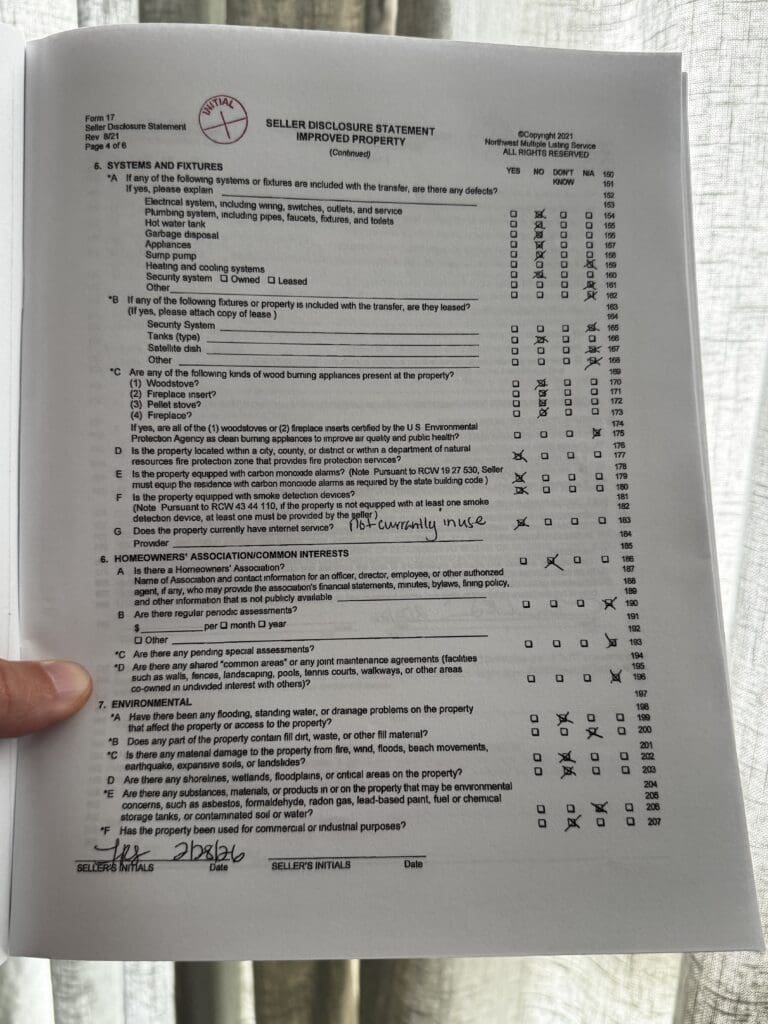
- It's still governed by Form 17. Washington's seller disclosure law shapes what you do with what you learn.
Here's what I would say about the King County market right now. It's shifting, a little, toward buyers. Not everywhere. Not every home. Certain neighborhoods and certain home types are still pulling multiple competitive offers, full stop. But outside of those pockets, homes are sitting on the market longer than they have in the past few years, and it's summer, which means there's more inventory right now than at any other point in the calendar. That combination gives buyers something they haven't had in a while: choice. If you're planning your exit strategy, understanding how to sell your home in Bothell efficiently starts with understanding how buyer leverage is changing across King County.
And when buyers have choice, they don't just negotiate on price. They negotiate on the inspection list. A pre-listing inspection in King County is how a lot of sellers are getting ahead of that conversation before it starts, instead of reacting to it mid-contract.
Why Pre-Listing Inspections Are Having a Moment Right Now
I want to be precise about what's happening, because "buyer's market" gets thrown around too loosely. This isn't that. What's actually happening is more nuanced, and it's the kind of nuance that matters to your bottom line. The homes that are priced right, staged well, and located where people genuinely want to be are still moving fast, sometimes with multiple offers. The rest of the market is experiencing something different: more days on the market, more room for buyers to negotiate, and more competition from other sellers for the same pool of buyers.
To make their home look sweeter in that environment, sellers are increasingly offering a pre-inspection report. I saw this play out firsthand at a recent Open House I was holding. The seller had the report ready, but instead of publishing it with the listing, they held it back and gave it to buyers only after an offer came in. Both approaches are legitimate. Which one is right for you depends on your home, your neighborhood, and how much competition you're actually facing.
5 Proven Reasons Pre-Listing Inspections Save
If you're asking whether front-loading an inspection is worth the upfront investment, consider these five direct advantages for sellers in today's local market:
- Eliminate Price-Gouging Renegotiations: When buyers find unexpected defects during their own inspection, they often request inflated repair credits or large price drops. Identifying issues beforehand lets you fix them at your own cost—or price the home accurately from day one.
- Streamline the Closing Timeline: Unexpected structural, electrical, or plumbing findings can derail transaction timelines. Getting a pre-inspection helps prevent delays and answers the critical question many sellers ask regarding how long it takes to sell a home in Bothell.
- Build Buyer Trust Upfront: Transparency builds confidence. Providing a clean or clearly documented inspection report encourages buyers to write cleaner, less contingent offers.
- Protect Yourself Under Washington Law: A pre-inspection ensures complete compliance with RCW 64.06.030 (Form 17), shielding you from potential post-sale legal disputes regarding undisclosed material defects.
- Maintain Control Over the Transaction: Instead of making hasty, high-stress repair decisions during a tight 10-day inspection contingency, you retain complete authority over vendor choices, timelines, and budgets before your home ever hits the market.
What a Little More Buyer Leverage Actually Looks Like
Negotiations are only as good as the information you have. That's true for buyers and it's true for sellers. When buyers have more houses to choose from, they use that leverage to ask for repairs, credits, or price adjustments based on what an inspector finds. A pre-listing inspection changes the shape of that conversation before it ever starts, because you already know what's in your home. You're not finding it out for the first time during a ten-day contingency window with a buyer's inspector standing in your kitchen.
Right now there is a slight shift into a more buyer-friendly market. This is not always the case, as some neighborhoods and home types are still desirable and receive multiple competitive offers. However, everywhere else outside of these is experiencing inventory on market for longer than the past few years, and it is summer, so there's more inventory now than at any time of the year. Buyers have choice, and that comes with the ability to ask for more than just a lower price. It can mean items on their inspection list.
To get ahead of this and make their home look sweeter, sellers are offering more and more the pre-inspection report. They can offer this on the listing, or, as I saw in a recent listing I was holding an Open House for, they can wait to give it to you after you make an offer. This report can be useful in providing information on issues already found in an inspection that the seller may or may not have fixed yet. Negotiations are only as good as the information you have. The more information, well, you get it.
What a Pre-Listing Inspection Actually Does For You
A pre-listing inspection isn't a substitute for the buyer's own inspection. It's a head start. Here's what it actually gets you as a seller.
Three things a pre-listing inspection report does that a listing photo can't.
- It removes the surprise. You already know what's in your house before a buyer's inspector shows up and finds it for the first time, on their clock, with their leverage.
- It lets you choose your battles. You can fix what's worth fixing, price around what you're leaving as-is, and decide that in advance instead of under contract pressure.
- It supports accurate disclosure. A report gives you documented, specific information to work from when you fill out your Form 17, instead of relying only on what you happen to remember or notice.
Cost range per industry vendor reporting, not an NWMLS-verified figure. Confirm current local inspector pricing before budgeting. Form 17 and inspection contingency timing per RCW 64.06.030 and standard NWMLS Form 35 practice.
Washington's Form 17 and What You're Required to Disclose
This is the part sellers sometimes skip past, and it's the part that matters most. Washington requires sellers to complete the Real Property Transfer Disclosure Statement, better known as Form 17, and deliver it to the buyer no later than five business days after mutual acceptance, unless it's waived. Once the buyer has it, they get three business days to review and, if something in it changes their mind, rescind. That's the law, per RCW 64.06.030.
Here's why that matters to your pre-listing inspection decision. Form 17 asks what you know. If a pre-listing inspection turns up a real issue, a foundation crack, an aging roof, a side-sewer concern, that's now something you know, and Washington law expects you to disclose it. That's not a reason to skip the inspection. It's a reason to have the conversation with your agent about what you found and how to handle it, whether that means repairing it, pricing around it, or disclosing it clearly and moving on. Buyers generally respond better to a seller who's upfront than one who gets caught not knowing something they should have known. If you're cross-shopping current market dynamics as a seller or potential buyer, reviewing whether now is a good time to buy in Greater Seattle helps put buyer motivations into perspective.
If your pre-listing inspection finds something worth addressing, loop your agent in before you decide whether to repair it or disclose it as-is. The goal isn't to hide anything. It's to walk into your listing with a clear plan instead of a surprise.
Publish It Now, or Hold It Until You Have an Offer?
There isn't one right answer here, and I tell sellers that directly. Publishing the report with your listing can build trust with buyers upfront and can encourage stronger, less contingent offers in a competitive segment of the market. Holding it and releasing it after an offer comes in can preserve a little more negotiating room, especially if your home is likely to draw genuine competition. What I saw recently at an Open House I was holding is a good example of the second approach in practice: the seller had the report ready and used it as a tool once a buyer was already engaged, not before.
The right call depends on your home, your neighborhood, and how much real competition you're facing right now. That's exactly the kind of decision that shouldn't be made off a national headline. It should be made off your specific street, your specific comps, and a conversation with someone who's actually looking at both.
Wondering How Long Your Home Will Actually Take to Sell?
Days on market varies a lot right now depending on price point and neighborhood. I break down the current numbers for Bothell sellers here.
Read: Days on Market in BothellIf you're prepping a listing right now, a pre-listing inspection is one piece of a bigger checklist. I've put together a full room-by-room checklist of what to actually fix before you list, and a rundown of the nine mistakes Bothell sellers make that a pre-listing inspection can help you avoid entirely.
King County's market hasn't flipped to buyers across the board, but it's shifted enough that buyers outside of the hottest pockets have real leverage, and they're using it on more than price. A pre-listing inspection lets you get ahead of that, whether you publish the report with your listing or hold it for the right moment. Either way, it converts the unknown into something you can plan around, and under Washington's Form 17 disclosure law, that's exactly the position you want to be in.
Frequently Asked Questions
What is a pre-listing inspection in King County?
A pre-listing inspection is a home inspection a seller orders and pays for before putting their home on the market, rather than waiting for the buyer's inspector. It gives the seller documented information about the property's condition ahead of time, which can be used to make repairs, price the home accurately, and support Washington's required Form 17 seller disclosure statement. In King County, pre-listing inspections typically run in the $296 to $424 range as of 2026, per industry vendor reporting, though pricing varies by home size and inspector.
Do I have to disclose what a pre-listing inspection finds?
Yes, if a pre-listing inspection reveals a known material defect, Washington law generally requires you to disclose it on your Form 17 seller disclosure statement. Under RCW 64.06.030, the seller must deliver Form 17 to the buyer no later than five business days after mutual acceptance, unless it's waived, and the buyer then has three business days to review it and potentially rescind. A pre-listing inspection doesn't create new disclosure obligations, it simply gives you documented information about what you now know, which is the standard the law is built around.
Should I publish my pre-listing inspection report or wait until I get an offer?
Both approaches are common in King County, and the right choice depends on your home's competition level. Publishing the report with your listing can build buyer trust and encourage stronger offers, particularly for homes expecting multiple offers. Holding the report and sharing it only after receiving an offer can preserve more negotiating flexibility in the meantime. Aaron Robinson has seen both strategies used successfully in recent King County listings and recommends deciding based on your specific home and neighborhood, not a blanket rule.
Is King County currently a buyer's market or a seller's market?
King County is experiencing a slight shift toward more buyer leverage in 2026, though it varies significantly by neighborhood and home type. Desirable neighborhoods and home types are still generating multiple competitive offers. Outside of those pockets, homes are spending longer on the market than in recent years, and summer inventory levels are higher than at other points in the year, giving buyers more room to negotiate on repairs and price. This is a professional field observation from Aaron Robinson based on current listings and showings, not a single cited statistic, and conditions vary by specific submarket.
How long does a buyer's inspection contingency last in Washington?
The standard NWMLS inspection contingency, found in Form 35, is typically negotiated between five and ten days, with ten days commonly used as the default if the field is left blank. A pre-listing inspection doesn't eliminate this contingency period for the buyer, but it does mean the seller already knows what a buyer's inspector is likely to find, which can shorten or simplify the negotiation that follows.
Thinking About Listing in King County?
Let's talk through whether a pre-listing inspection makes sense for your specific home before you decide. I'll meet you exactly where you are.
Talk to AaronSimilar Posts
Should You List Your Seattle Home in the Fall? The Pros and Cons
Should You List Your Seattle Home in the Fall? The Pros and Cons | Aaron Robinson Selling Should You List Your Seattle Home in the Fall? The Pros and Cons The spring and summer rush is behind us. That doesn’t mean your window closed. Here’s what fall really offers, what it costs you, and how…
Preparing Your Seattle Garden for a Spring Sale: Curb Appeal Tips
Preparing Your Seattle Garden for a Spring Sale | Aaron Robinson Selling Preparing Your Seattle Garden for a Spring Sale: Curb Appeal Tips Winter is a hard time to get a PNW yard ready for spring showings. A little maintenance, done in the right order, goes a long way toward buyer charm. By Aaron Robinson…
Washington State Real Estate Disclosure Laws: What Sellers Must Disclose
Washington State Form 17 Disclosure Laws: What Sellers Must Disclose | Aaron Robinson Selling Washington State Real Estate Disclosure Laws: What Sellers Must Disclose Form 17 isn’t about knowing everything about your house. It’s about being honest about what you do know, and what you don’t. By Aaron Robinson · Keller Williams Realty Bothell · …
Why Your Seattle Home Expired: 3 Reasons It Didn’t Sell (and How to Fix It)
Why Your Seattle Home Expired: 3 Reasons It Didn’t Sell | Aaron Robinson Selling Why Your Seattle Home Expired: 3 Reasons It Didn’t Sell (and How to Fix It) An expired listing isn’t bad luck. It’s information. Here’s what I’m actually seeing on the ground right now, and what it means for your relist. By…
Seattle Home Staging Trends for 2026: What 3 Things Buyers Are Looking For
Seattle Home Staging Trends for 2026: What 3 Things Buyers Are Looking For | Aaron Robinson Selling Seattle Home Staging Trends for 2026: What 3 Things Buyers Are Looking For Less is more. That’s the whole trend if I had to sum it up in three words. Here’s why over-staging and over-improving might actually be…
How to Sell a Tenant-Occupied Property in Seattle: Navigating Local Laws
How to Sell a Tenant-Occupied Property in Seattle: Navigating Local Laws | Aaron Robinson Selling How to Sell a Tenant Occupied Property in Seattle: Navigating Local Laws COVID changed a lot of lives, and it changed how landlords sell property in Seattle city limits, permanently. Here’s what actually applies today if you own a rental…