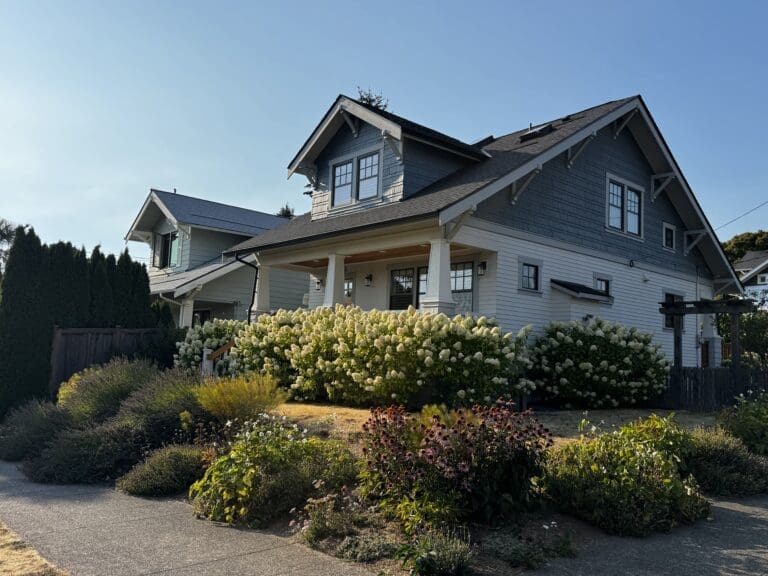
Bothell WA real estate market 2026
The Bothell, WA Real Estate Market Has Changed in 2026. Here's What Sellers Need to Know Right Now.
Not a crash. Not a boom. Something more complicated. And for the right Bothell seller, something that might actually be opportunity.
Let me tell you something that most real estate content won't say out loud. The Bothell, WA real estate market in 2026 is being shaped more by what's happening on the national news than by what's happening on the local MLS. And if you're thinking about selling, you need to understand both.
Here's what I would say about the current moment: the shift between 2025 and 2026 is not about prices crashing or interest rates spiking to the moon. It is about something more insidious than either of those things. It is about sentiment. And sentiment, in a real estate market, moves buyers before data does.
To understand the current dynamic, it helps to recall how the Bothell market performed in 2025. 2025 was actually starting to feel pretty good. Rates were ticking down. Inventory was loosening slightly. Buyers who had been sitting on the sideline were beginning to come back. The psychology was shifting toward optimism. And then 2026 showed up.
Market data per U.S. Bureau of Labor Statistics, Freddie Mac, and Northwest MLS as of Q1 2026. Always confirm current figures with your agent before making listing decisions.
What Actually Changed Between 2025 and 2026
The list of headwinds in 2026 is not small. Tariffs creating cost uncertainty across supply chains. Fuel prices surging in a way that shows up in grocery bills and consumer confidence simultaneously. An armed conflict involving Iran that rattles energy markets every time there is a headline. A March CPI reading above 4 percent for the first time in a long time, per the U.S. Bureau of Labor Statistics, signaling that the inflation fight is not as over as everyone hoped.
None of that directly changes the value of a well-located Bothell home. But it changes whether a qualified buyer feels ready to act on that home. And that is the part sellers need to understand right now.
Real estate is local. But buyers are human beings reading the same news you are. The hesitation in the market right now is not primarily a function of pricing or inventory. It is a function of people feeling uncertain about the broader world and letting that uncertainty slow decisions that have a 30-year horizon. It is not irrational. It is just the reality of the moment.
Sellers who misread this moment assume buyer hesitation means their home is priced wrong. Often it is not. The hesitation is sentiment-driven, not price-driven. A home that is not selling is not automatically overpriced. These are precisely the mistakes Bothell sellers make when they misread the moment. But a home that is priced correctly and not presented compellingly is leaving real money on the table for the buyers who are still active. Those buyers are serious, qualified, and motivated. They are just fewer in number. Which means every showing counts more than it did in 2024 or early 2025.
The Rate Roller Coaster Nobody Predicted
I want to spend a moment on rates because this is where the 2026 market has been most disorienting for everyone, buyers and sellers alike.
The 30-year fixed rate and the 10-year Treasury yield have moved in 2026 like a car on one of those old wooden roller coasters from the 1920s. You know the ones. The rickety, not-sure-how-this-is-going-to-go thrill rides where you're never quite certain whether the next drop is exhilarating or a structural failure. That is roughly the vibe. According to the Freddie Mac Primary Mortgage Market Survey, rate fluctuation continues to alter affordability benchmarks from month to month.
What this creates for sellers is a buyer pool that is more reactive to rate movement than usual. A buyer who was calculating at 6.8 percent in February may be recalculating at 7.2 percent in April and then 6.9 percent in May. That is not a buyer who is gone. That is a buyer who is watching and waiting for a moment that feels stable enough to commit.
The sellers who benefit from this environment are the ones whose homes are positioned to move when that window opens, not the ones scrambling to get ready after rates temporarily dip and the phone starts ringing again. Preparation is not optional right now. It is the entire game.
The Window Opens Faster Than It Looks Like It Will
Rate-driven buyer activity tends to compress into short windows. When rates dip meaningfully, even temporarily, buyers who have been sitting on pre-approvals move quickly. The homes that capture that activity are the ones that were already on the market, already priced correctly, and already photographed and marketed in a way that makes the decision easy.
The homes that miss the window are the ones that were almost ready. Almost priced. Almost staged. Almost listed. In a volatile rate environment, almost is the most expensive word in real estate.
Why Bothell Is More Insulated Than Most Markets
Here is the part of this conversation that should actually make Bothell sellers feel grounded rather than nervous.
Real estate is neighborhood-specific and house-specific before it is anything else. A well-located, well-maintained home in a Bothell neighborhood with strong Eastside access is not the same product as a home in a market with weaker fundamentals. Bothell has structural advantages in 2026 that matter.
The SR-522 and I-405 corridor puts Bothell within practical commuting range of the two largest employment centers on the Eastside: Redmond and Bellevue. The Northshore School District continues to attract buyers from within the region. And Bothell's price point, while it has risen meaningfully over the past several years, still represents real relative value compared to Kirkland, Redmond, or Bellevue for buyers who have been priced out of those markets. This factor is a primary reason why Bothell is the Eastside's most compelling value for relocating buyers.
That combination, location, access, value, creates a buyer profile for Bothell that is more durable than markets that depend primarily on speculation or lifestyle amenity alone. When sentiment is suppressed, buyers who are buying fall back on fundamentals. Bothell has the fundamentals.
The Bellevue Effect: What Growth Next Door Means for Sellers Here
Something is happening in the Greater Seattle commercial landscape that does not always make the residential real estate headlines but absolutely should. Bellevue is growing. Office leasing, new business establishment, and corporate relocations are trending toward Bellevue as Seattle's office occupancy continues to drift lower. That is not a political statement. It is a market observation supported by localized data from the Northwest Multiple Listing Service (NWMLS).
Businesses follow each other. When one technology company or professional services firm establishes a significant footprint in Bellevue, it creates a gravity well for suppliers, partners, and adjacent firms. More businesses mean more workers. More workers relocating to the Eastside mean more buyers looking for a place to live within a reasonable commute of where they work.
Bothell is the more affordable alternative to Bellevue for a lot of those people. If you are selling a home in Bothell that is well-positioned for an Eastside commuter, you may be sitting on a better asset in this specific moment than the general market sentiment suggests. The relocating buyer is still moving here. They did not cancel their plans because of a CPI report. Their company still opened the office.
Who Is Still Buying in Bothell Right Now
This is a question worth asking directly, because the buyers who are active in a sentiment-suppressed market are a specific group and they behave differently than the broad buyer pool of a seller's market.
The buyers who are writing offers right now have something in common.
Relocating employees: Tech workers, healthcare professionals, and corporate transfers moving to the Eastside on a timeline driven by their employer, not by market sentiment. They need a home. The macro noise is real but it does not change their move date. This group is actively searching and motivated to close. It represents the relocation pipeline that's still flowing into Greater Seattle.
Move-up buyers who are equity-rich: Homeowners who bought in the Eastside market in 2018 through 2022 are sitting on significant equity. For those whose life circumstances have changed, trading one Eastside home for another is a transaction that makes sense regardless of what the national news cycle is doing. Their down payment is not rate-sensitive. Their motivation is internal.
Buyers who have been waiting and are done waiting: Buyers who sat out 2023, 2024, and most of 2025 waiting for rates to return to 3 percent have, in many cases, accepted that the 3 percent era is over. This group is qualified, pre-approved, and actively competing for homes that are well-positioned. They are not the casual browser. They are the serious buyer.
A home marketed to these specific buyer profiles, with photography, pricing, and listing language that speaks directly to Eastside commutability, value relative to Bellevue and Kirkland, and move-in readiness, will outperform a home listed with generic market positioning. Know who is buying before you decide how to present what you're selling.
Thinking About Selling in Bothell This Year?
Let's talk about what your specific home is worth to the buyers who are actually active right now. That conversation changes the strategy.
Talk to Aaron The Mistakes to AvoidWhat Sellers Should Actually Do With This Information
Here's what I would say about translating market awareness into action. Knowing the macro environment is step one. Knowing what to do about it is step two. Here is where step two starts.
Price with clarity, not optimism. In a market where buyer sentiment is already suppressed, an overpriced listing does not just fail to sell. It actively signals to the buyers who do see it that something is wrong. Serious buyers in 2026 are doing their homework. They know the comps. A home priced above where the data supports it will sit, accumulate days on market, and ultimately sell for less than a correctly priced listing would have from the start. The data on this is consistent across market cycles.
Present as move-in ready as your budget allows. The active buyer pool right now is not looking for a project. They are looking for certainty in an uncertain world. A home that shows well, has addressed its deferred maintenance, and is genuinely ready to close without a list of conditions gives buyers the thing they most want right now: one less decision to navigate. That is worth real money in the current environment.
Market to the relocating buyer specifically. If your home has a commute story, tell it. If it is within practical range of Bellevue, Redmond, or the SR-522 corridor tech campus cluster, that needs to be in the listing language. Relocating buyers are researching remotely before they ever set foot in a neighborhood. The home that explains its commute positioning clearly wins the showing request over the home that makes the buyer do the math themselves.
Be ready to move when the rate window opens. There will be moments in 2026 when rates dip and the buyer sentiment shifts, even briefly, toward action. The sellers who capture those windows are the ones who are already on the market, fully prepared, with a listing that is ready to convert a showing into an offer. Be one of those sellers.
The Bothell real estate market in 2026 is more complicated than a single headline can capture. National sentiment is suppressed, rate volatility is real, and buyers are more cautious than they were 18 months ago. And yet Bothell's fundamentals, its Eastside positioning, its value relative to Bellevue and Kirkland, and its direct exposure to the relocation pipeline that Bellevue's growth is generating, make it a more durable seller's market than most. The sellers who succeed right now are the ones who understand the moment clearly enough to prepare for it specifically, rather than either panicking or pretending nothing has changed.
Frequently Asked Questions
Is it a good time to sell a home in Bothell, WA in 2026?
It depends on the specific home and how the seller approaches the listing. Bothell's market in 2026 is not a seller's market in the full-demand, every-home-gets-multiple-offers sense that defined 2021 through early 2023. But it is also not a market where well-positioned homes are sitting unsold. The active buyer pool in Bothell in 2026 includes relocating employees on employer-driven timelines, move-up buyers with significant equity, and buyers who have been waiting and are now ready to act. Sellers who price correctly relative to current comps, present their home as move-in ready, and market specifically to the Eastside commuter and relocation buyer profile are finding genuine success. Sellers who approach the 2026 market with 2022 expectations are having a harder time. The question is not whether to sell. It is whether to prepare seriously enough to meet the market where it actually is.
How have interest rates affected the Bothell real estate market in 2026?
Rate volatility in 2026, with the 30-year fixed and 10-year Treasury moving in an unpredictable pattern throughout Q1, has contributed to buyer hesitation and reduced the overall volume of active buyers in the Bothell market compared to 2025. This is not a Bothell-specific phenomenon. It is a national pattern being felt across most markets. The practical effect for sellers is that the active buyer pool is smaller and more deliberate than it was during the rate-easing period of mid-to-late 2025. However, the buyers who are active tend to be highly qualified and motivated, which means the conversion rate from showing to offer remains meaningful. When rates temporarily improve, buyer activity can compress into a short window, making preparation and market-readiness critical for sellers who want to capture that demand.
Why are Bothell home prices holding up when the broader market feels uncertain?
Bothell has structural advantages that insulate it from broader market volatility more than many comparable markets. Its location on the SR-522 and I-405 corridor gives it practical commute access to both Redmond and Bellevue, the two largest and most active Eastside employment centers. Bellevue's continued commercial growth in 2026, as Seattle's office occupancy has drifted lower, is generating a relocation buyer pipeline that flows naturally toward Bothell as the more affordable Eastside alternative. Additionally, Bothell's price point relative to Kirkland, Redmond, and Bellevue means it attracts buyers who have been priced out of those markets but are not willing to leave the Eastside entirely. These fundamentals create a demand floor that price-sensitive national sentiment does not easily erode.
How should I price my home in Bothell in the current 2026 market?
Pricing correctly in the 2026 Bothell market requires a comp-anchored strategy rather than an aspirational one. The active buyer pool is doing serious research, and an overpriced listing does not just fail to attract offers: it signals to sophisticated buyers that something may be wrong with the home. A correctly priced listing, defined as priced at or slightly below what recent comparable sales in the specific neighborhood support, generates showing traffic from the buyers who are most likely to make serious offers. In the 2026 environment, where buyers are cautious and rate-reactive, there is limited room for the test-and-reduce strategy that was available in higher-volume markets. Working with an agent who has current transaction experience in your specific Bothell submarket, and who can build a pricing recommendation from recent closed data rather than active list prices, is the most important step a seller can take.
Who is buying homes in Bothell, WA right now?
The active buyer pool in Bothell in 2026 is concentrated in three groups. The first is relocating employees, particularly technology and healthcare sector workers moving to the Eastside on employer-driven timelines that are not dependent on national sentiment. The second is equity-rich move-up buyers who purchased elsewhere on the Eastside during the 2018 through 2022 period and whose life circumstances have changed in ways that make a trade meaningful regardless of the macro environment. The third is buyers who sat out the market for two or more years expecting rates to return to pandemic-era lows and have now accepted that the current rate environment is the operating reality. All three groups tend to be pre-approved, financially prepared, and motivated to close. They are not the casual browsers of a hot market. They are serious buyers, and a correctly positioned Bothell listing will reach them.
Let's Talk About Your Specific Home and This Specific Market.
The 2026 Bothell market rewards preparation and clarity. Let me show you what both look like for your address.
Talk to Aaron